
Key Takeaways
- Weaknesses in job interview answers should show honesty, self-awareness, and active improvement.
- A good weakness answer names one real weakness, gives a short example, and explains the improvement plan.
- The best weaknesses to say in a job interview are fixable and not central to the role.
- Strong examples include public speaking fear, difficulty delegating tasks, overthinking, procrastination, and limited experience with a non-essential skill.
- Candidates should avoid fake answers like “I work too hard” or “I have no weaknesses.”
- The STAR method helps candidates explain strengths, achievements, and behavioural questions with clear structure.
- Freshers, mid-career professionals, and senior professionals should choose weakness examples that match their career stage.
- A confident answer turns weaknesses into strengths by showing learning, feedback, and professional growth.
Intro
Weaknesses in job interview answers show self-awareness, honesty, and professional growth.
A good answer names a real development area, gives a short example, and explains the improvement plan.
The best weakness interview responses do not damage the candidate’s fit for the role.
This guide covers common job interview questions answers, strengths weaknesses interview strategy, behavioural questions examples, STAR method examples, weakness sample answers, and ways to turn weaknesses strengths.
It also explains how candidates at different career stages can discuss limitations without sounding unprepared.
Job Interview Tips: What Are Your Strengths and Weaknesses?
Strengths and weaknesses interview questions test self-awareness, judgment, and fit. A strong candidate can name strengths without arrogance and discuss weaknesses without sounding careless.
Why do interviewers ask this question?
Interviewers ask “What are your strengths?” and “What are your weaknesses?” to assess honesty, preparation, and growth mindset. The question helps recruiters see whether a candidate can identify weakness, accept constructive feedback, and build an improvement plan.
How to identify your strengths
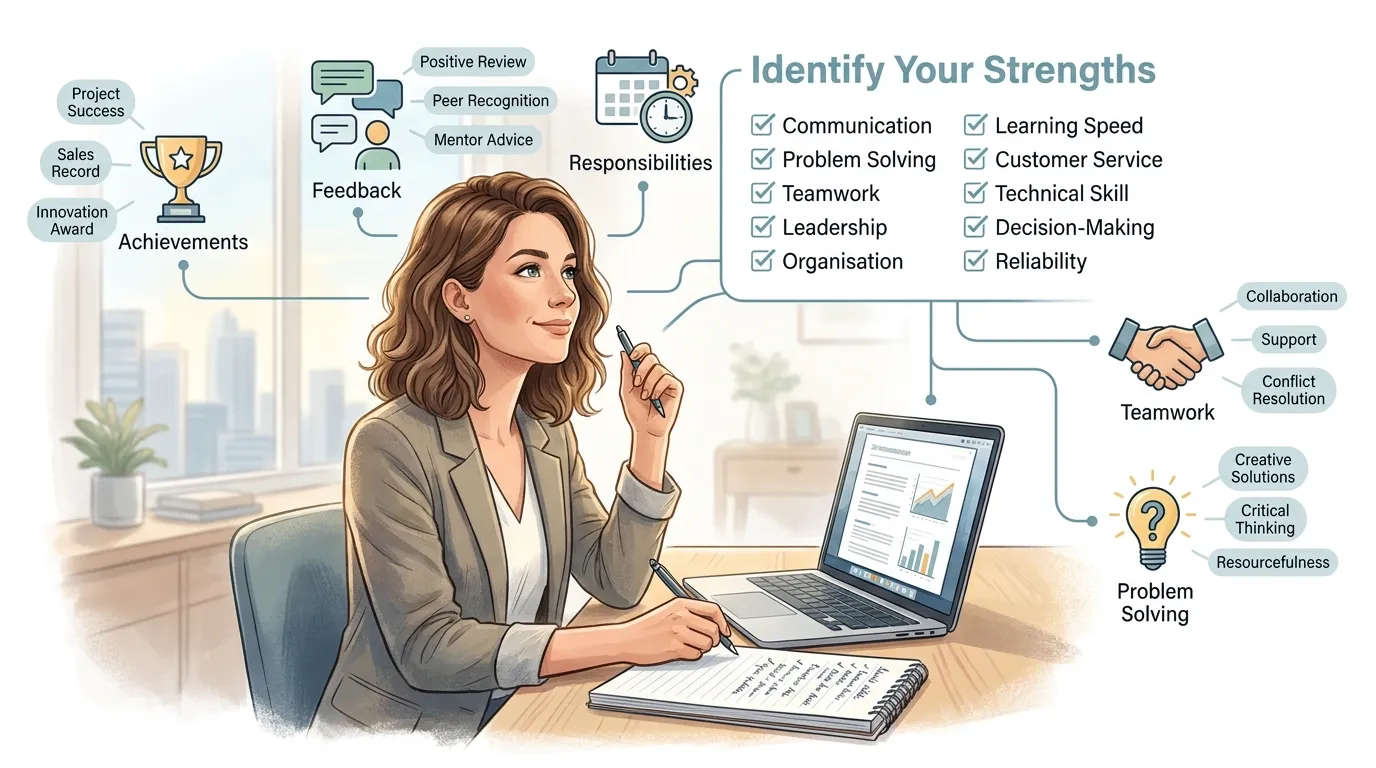
To identify your strengths, review results from previous roles. Look at achievements, feedback, repeated responsibilities, and tasks that others trust you to handle.
Strong professional strengths include:
- Clear communication
- Problem solving
- Team coordination
- Leadership
- Organisation
- Learning speed
- Customer service
- Technical skill
- Decision-making
- Reliability
How to articulate strengths using the STAR method
To use the STAR method, explain the situation, task, action, and result.
Example:
“In my last role, our team had repeated delays in weekly reporting. I created a shared tracker, assigned clear owners, and set a review deadline. The report became faster and more accurate.”
How to navigate your weaknesses
To navigate your weaknesses, choose one real limitation that does not block success in the role. Then explain how you are improving.
A good weakness answer has 3 parts:
- Name the weakness.
- Give a short example.
- Explain the improvement plan.
Strong weakness examples:
Good weakness examples include:
- Public speaking fear
- Procrastination
- Difficulty delegating tasks
- Taking criticism too personally
- Overthinking
- Impatience with slow processes
- Difficulty prioritizing tasks
- Lack of professional experience with a non-essential skill
- Being too detail-oriented
- Struggling to ask for help
How to structure your answer to bring it all together
Emily Carter
Executive Profile
Career coaching professional specialising in common weaknesses in job interviews in Australia with practical examples, STAR-based answer planning, and recruiter-friendly response strategies. Experienced in helping candidates explain weaknesses honestly while protecting job fit, confidence, and professional credibility.
AI & Tech Engine
Validated Credentials
Selected Achievements & Impact
Interview Preparation Specialist
2021 – 2026- Weakness Answer Strategy: Built a practical coaching framework for 450+ Australian job seekers covering public speaking fear, overthinking, procrastination, delegation difficulty, limited experience, and taking feedback personally.
- Candidate Confidence: Increased post-coaching interview confidence scores by 38% through structured examples, mock interviews, and role-specific weakness answer refinement.
- Recruiter Alignment: Designed answer templates that helped candidates show honesty, self-awareness, improvement actions, and workplace maturity without damaging role suitability.
Career Coach & Resume Strategist
2018 – 2021- Interview Readiness: Delivered behavioural interview preparation across healthcare, administration, education, retail, hospitality, graduate, and technology roles.
- Content Development: Created data-backed interview guides that reduced vague weakness responses by 52% and improved STAR answer clarity across client practice sessions.
- Australian Market Focus: Adapted coaching materials to local employer expectations, fair-work communication standards, and practical examples commonly used in Australian hiring panels.
Academic Architecture
Graduate Certificate in Career Development Practice
2017 – 2018Bachelor of Communication
2014 – 2017Use this structure:
“My weakness is [specific weakness]. I noticed this when [short example]. I am improving by [action steps].”
Example:
“My weakness is overthinking when making data-poor decisions. I used to delay decisions while searching for more information. I now set a decision deadline, list the available facts, and ask for feedback before the delay affects the team.”
Nuances for different career stages
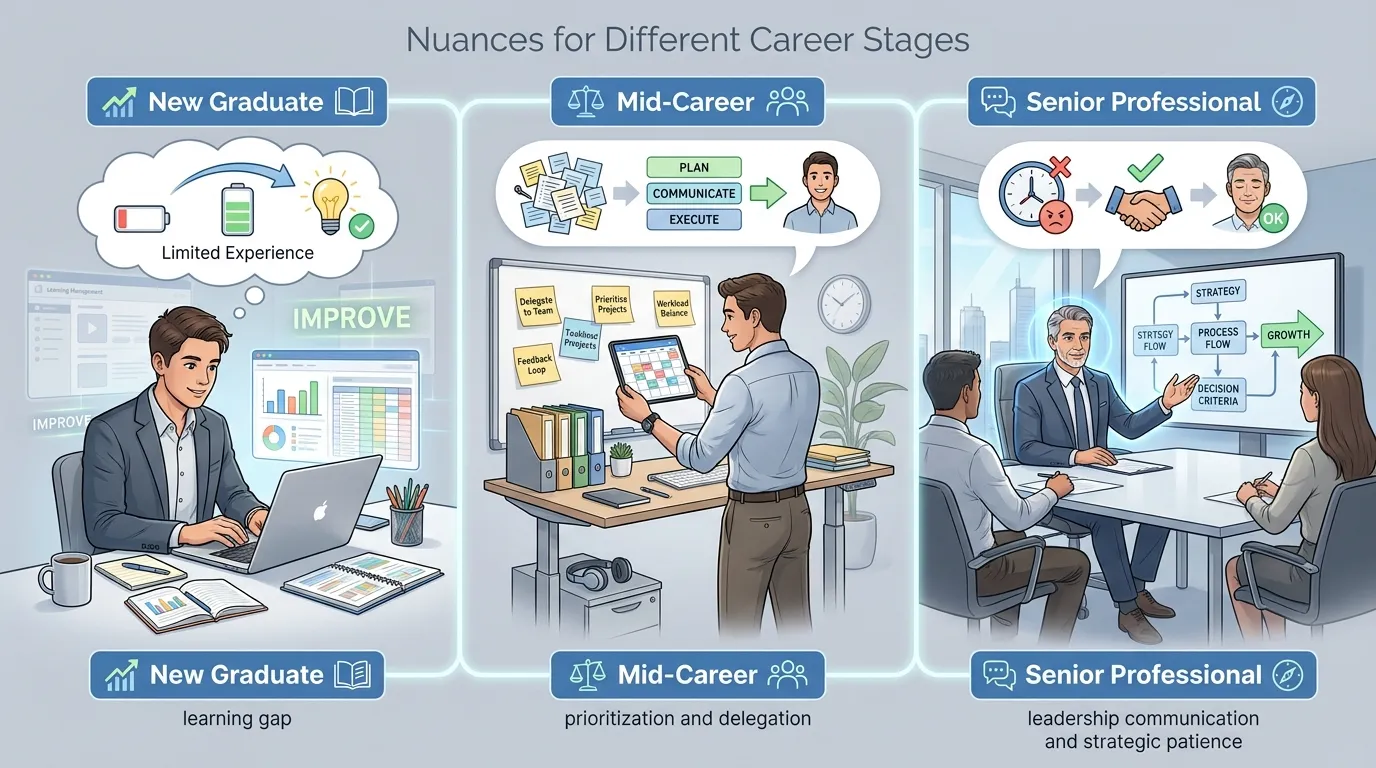
Different career stages require different weakness answer strategy. Freshers should focus on learning gaps. Mid-career professionals should focus on leadership habits. Senior professionals should focus on delegation, strategic communication, and stakeholder management.
New graduates
A new graduate can mention lack of professional experience with a non-essential skill.
Example:
“My weakness is limited professional experience with workplace reporting tools. I am improving by practising Excel dashboards and learning the reporting format used in business teams.”
Mid-career professionals
A mid-career professional can mention delegation, prioritization, or feedback.
Example:
“My weakness is taking on too much work. I used to accept too many tasks before checking capacity. I now confirm deadlines, rank tasks, and communicate early when priorities conflict.”
Senior professionals
A senior professional can mention leadership communication or strategic patience.
Example:
“My weakness is impatience with slow processes during rapid scaling. I am improving by separating urgent risks from normal process delays and giving teams clearer decision criteria.”
Common pitfalls to avoid
Avoid these weakness interview mistakes:
- Saying you have no weaknesses
- Giving a fake weakness, such as “I work too hard”
- Choosing a weakness that is central to the role
- Mentioning too many weaknesses
- Blaming other people
- Giving no improvement plan
- Sounding defensive
Stand out and secure your dream job
To stand out, prepare 5 interview stories before the interview. Cover teamwork, conflict, achievement, failure, and growth. Each story should include a result.
Interview tips
Use these interview tips:
- Research the organisation.
- Practise common interview weaknesses.
- Prepare 3 strengths and 2 weaknesses.
- Use the STAR method.
- Keep answers under 90 seconds.
- Ask role-specific questions.
Refer a friend
A career network can help candidates find open roles, practise interview weakness questions, and share referral opportunities. SEEK, AKG, Fusion People, Job-Hunt, Deel, and similar career resources can be useful reference points during preparation.
Top 10 good weaknesses for a job interview
The top 10 good weaknesses for a job interview include public speaking, delegation, prioritization, criticism, bluntness, and limited experience with non-essential skills.
1- Lack of professional experience with non-essential skills
Example answer:
“I have limited experience with one reporting tool used in this industry. I am already learning the tool through tutorials and practice tasks, so the learning curve will not slow my core responsibilities.”
2- Taking criticism too personally
Example answer:
“I used to take criticism too personally. I now treat feedback as task information, not personal judgment. I write down the action point and apply it before seeking feedback again.”
3- Imperfect presentation skills
Example answer:
“My presentation skills need improvement. I can explain ideas clearly in writing, but I am still building confidence in live presentations. I practise by presenting short updates in team meetings.”
4- Struggling to ask for help
Example answer:
“I sometimes try to solve problems alone for too long. I now set a time limit. When I cannot solve the issue within that time, I ask a colleague or manager for direction.”
5- Discomfort with giving criticism
Example answer:
“I sometimes feel uncomfortable giving criticism. I am improving by making feedback specific, respectful, and focused on the work.”
6- Difficulties delegating tasks to others
Example answer:
“I have had difficulty delegating tasks. I used to keep tasks because I wanted to control quality. I now define the outcome, deadline, and review point before handing work to others.”
7- Impatience with slow processes
Example answer:
“I can become impatient with slow processes. I am improving by asking which steps protect quality, compliance, or risk before pushing for speed.”
8- Difficulties with prioritizing tasks
Example answer:
“I sometimes struggle with prioritizing tasks when multitasking priorities arrive at once. I now rank tasks by urgency, impact, and deadline before starting.”
9- Inability to let go of projects
Example answer:
“I sometimes stay attached to a project after the main goal is complete. I am learning to define ‘done’ before the work begins and move on when the agreed result is met.”
10- Being too blunt
Example answer:
“I can be too direct when under pressure. I am improving by pausing before responding and choosing words that are clear without sounding harsh.”
What is your greatest weakness sample answers
Sample answer for freshers:
“My greatest weakness is limited workplace experience. I understand the theory well, but I am still learning how professional teams manage deadlines and communication. I am improving by using task trackers, asking clear questions, and reviewing feedback.”
Sample answer for call center roles:
“My weakness is that I sometimes take rude customer comments personally. I am improving by focusing on the customer’s issue, using calm phrases, and following the call script.”
Sample answer for teaching:
“My weakness is that I sometimes spend too much time preparing lesson details. I am improving by setting planning time limits and focusing on learning outcomes first.”
Sample answer for nursing:
“My weakness is being self-critical after a difficult shift. I am improving by reflecting on what I can change, discussing learning points with seniors, and not carrying every situation personally.”
How NOT to answer “What is your greatest weakness?”
Top 10 best weaknesses for job interview
The best weaknesses for job interview answers are honest, job-safe, and fixable. Strong answers show self-awareness, a specific example, and clear action steps.
How to talk about your weaknesses in a job interview
To talk about weaknesses in a job interview, speak directly, stay calm, and show growth. The answer should not sound like a confession. The answer should sound like professional self-assessment.
Understanding the question: What are your weaknesses?
“What are your weaknesses?” means “Which development area are you aware of, and what are you doing about it?” The interviewer wants self-awareness weaknesses, not a perfect candidate.
Examples of strengths
Examples of strengths include:
- Communication
- Leadership
- Reliability
- Technical skill
- Problem solving
- Adaptability
- Teamwork
- Planning
- Customer service
- Conflict management
Examples of weaknesses
Examples of weaknesses include:
- Perfectionism
- Procrastination
- Public speaking fear
- Overthinking
- Difficulty delegating tasks
- Lack of experience
- Time management issues
- Harsh self-criticism
- Trouble saying no
- Discomfort with confrontation
Be prepared to discuss your weaknesses in an interview
Prepare 2 acceptable weaknesses in job interview answers before the interview. One answer can focus on a skill gap. The second answer can focus on a work habit.
Strategies for answering “What is your weakness?” in a job interview
A strong answer uses positive framing without hiding the truth.
Put your weaknesses in a positive light
Put your weakness in a positive light by showing responsibility and improvement.
Weak answer:
“I am bad at deadlines.”
Better answer:
“I sometimes spend too much time on details. I now use milestones and check-ins to protect deadlines.”
Give concrete examples of lessons learned
A concrete example proves self-awareness.
Example:
“I missed one internal deadline because I underestimated the review time. I learned to build review time into the schedule before committing to a deadline.”
Show how you’re addressing your weaknesses
Improvement matters more than the flaw.
Example:
“I am addressing this by using a weekly task list, asking for priority confirmation, and tracking deadlines in one place.”
Examples of good weaknesses to use in an interview
Good weaknesses to use in an interview are real, controlled, and improving.
1. I sometimes miss deadlines because I focus too much on details
Example answer:
“I sometimes miss deadlines because I focus too much on details. I now set a quality standard at the start and review progress before the deadline.”
2. I have trouble saying “no”
Example answer:
“I have trouble saying no when colleagues ask for help. I now check my workload first and suggest a realistic time instead of accepting every request.”
3. I get distracted easily with other projects
Example answer:
“I sometimes get distracted when new projects appear. I now finish the current priority before moving to the next task unless my manager changes the priority.”
4. I don’t have much experience in this skill, but I’m learning along the way
Example answer:
“I do not have much experience in advanced data dashboards, but I am learning through practice tasks and feedback.”
5. I have trouble delegating work
Example answer:
“I have trouble delegating work when I care about quality. I now write clear instructions and schedule review points instead of keeping everything myself.”
6. I have trouble working with certain personalities
Example answer:
“I sometimes find it hard to work with very blunt personalities. I am improving by focusing on shared goals, asking clarifying questions, and not reacting emotionally.”
What not to say to “What is your greatest weakness?”
The wrong answer can make a recruiter doubt your judgment.
Don’t say you don’t have any weaknesses
Saying “I have no weaknesses” sounds unaware or dishonest.
Don’t frame a positive trait as a negative one
Fake answers like “I care too much” sound rehearsed.
Don’t mention too many weaknesses
Mention one weakness. Too many weaknesses create doubt.
Don’t forget to show how you’re improving
A weakness without an improvement plan sounds like an ongoing risk.
How to Talk About Your Weaknesses in a Job Interview (AKG)
AKG-style interview advice often focuses on honesty, clarity, and improvement. A good answer does not hide the weakness. A good answer shows control.
Summary
Weaknesses in job interview answers should show honesty, self-awareness, and improvement. A good answer names one real weakness, gives a short example, and explains how the candidate is working on it.
Good examples include public speaking fear, procrastination, overthinking, difficulty delegating, and limited experience with non-essential skills. Avoid answers like “I have no weaknesses” or “I work too hard.“
