
Key Takeaways
- A CV skills section that mirrors the job description keywords passes ATS filters and earns recruiter attention.
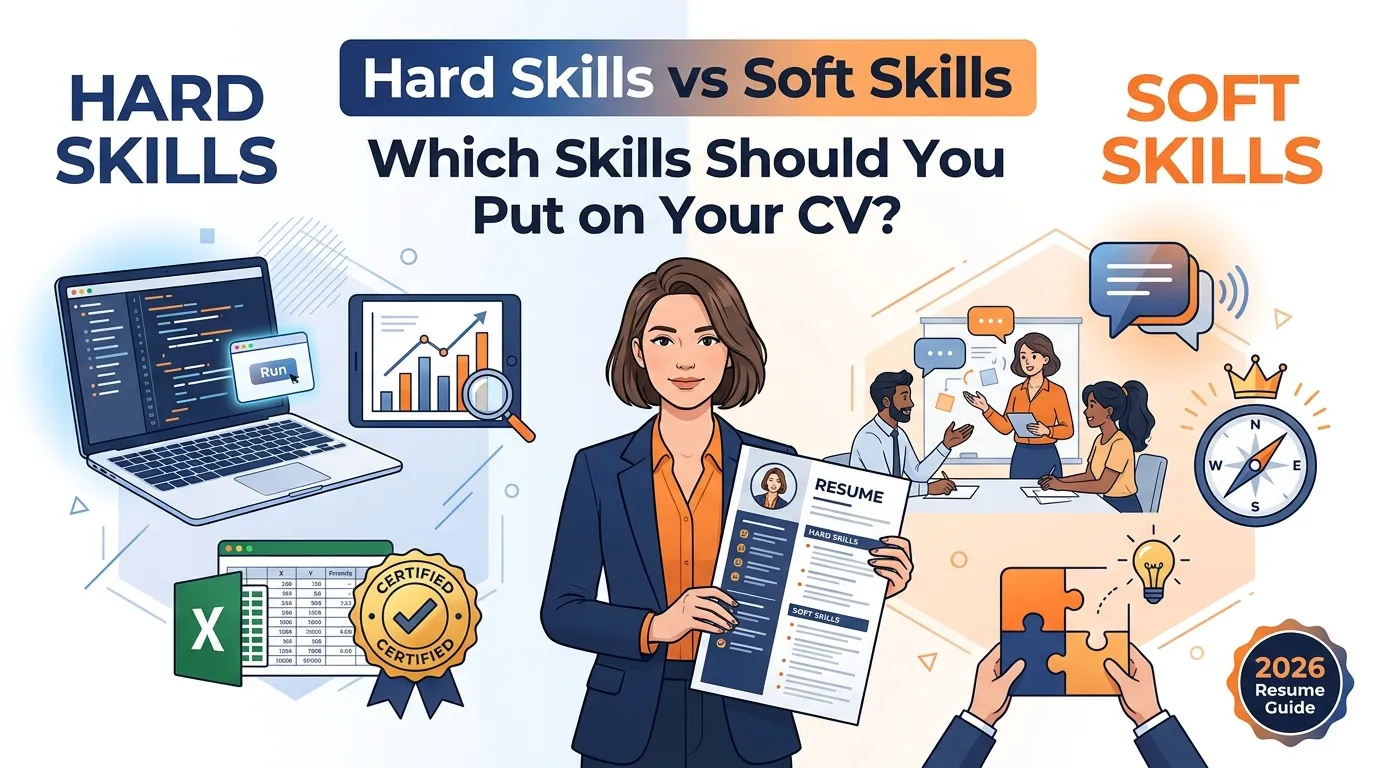
- Hard skills prove technical capability; soft skills demonstrate how a candidate works.
- List 8–15 skills with proficiency levels, embed skills in work experience using the STAR Methodology, and tailor the section for every application.
- Avoid generic skills and exaggerated proficiency. Use a skills-based CV for career changes.
- Proofread, run an ATS check, and submit a version built for each specific role.
Why Skills Matter on Your Resume
Importance of Listing Skills
Listing skills on a CV directly determines whether ATS software passes your application to a recruiter. Most companies use ATS platforms to filter resumes by keyword match before human review. A resume skills list that mirrors the job description keywords clears this filter. A resume without relevant skills listed gets rejected automatically, regardless of work history.
Beyond ATS, recruiters spend an average of 7 seconds on an initial resume scan. A clear, well-organized resume skills section gives recruiters the information they need in that window.
Difference Between Hard Skills and Soft Skills
Hard skills are specific, teachable abilities that can be measured, including software development, data analysis, financial analysis, and foreign language proficiency. Hard skills are learned through education, training, or practice and are verifiable through certifications or work output.
Soft skills are interpersonal and behavioral traits that affect how a person works, including communication, leadership, adaptability, and problem-solving. Soft skills are harder to measure but are evaluated through interviews, references, and work examples.
Both types belong on a CV. Hard skills prove technical capability. Soft skills demonstrate how a candidate works within a team and organization.
Hard Skills vs Soft Skills: Key Differences Explained
| Feature | Hard Skills | Soft Skills |
|---|---|---|
| Definition | Technical and measurable abilities | Personal and interpersonal abilities |
| How Learned | Education, training, certifications | Experience and personal development |
| Easy to Measure | Yes | No |
| ATS Importance | Very High | Moderate |
| Examples | Python, SEO, Excel, AutoCAD | Communication, Leadership, Teamwork |
| Verified By | Tests, portfolios, certificates | Interviews, references, work history |
Skills-Based CV vs. Traditional CV
A skills-based CV (also called a functional CV) leads with a core competencies section and groups experience under skill categories rather than job titles. A traditional CV follows reverse chronological order and places skills after work history.
Use a skills-based CV when changing careers, returning from a gap, or when transferable skills are stronger than direct experience. Use a traditional CV when your work history directly matches the target role.
Alex Mercer
Executive Profile
Data-driven Career Strategist specializing in ATS optimization and keyword taxonomy. Recognized expert at demonstrating exactly how to list skills on a CV by balancing quantitative metrics with qualitative impact. Proven record of increasing client interview rates by strategically mapping hard vs soft skills examples to modern job descriptions using cutting-edge AI parsing tools.
AI & Tech Engine
Validated Credentials
Selected Achievements & Impact
Senior Resume Strategist & Skills Consultant
2021 – 2026- ATS Optimization: Developed comprehensive frameworks detailing exactly how to list skills on a CV, resulting in a verified 45% increase in client callback rates across Fortune 500 applications.
- Skill Mapping Matrix: Pioneered a proprietary visual matrix outlining highly effective hard vs soft skills examples, boosting target keyword match rates by 60% in automated screening software.
- Client Coaching & Strategy: Directed over 500 1-on-1 sessions teaching technical professionals to transition from task-based lists to achievement-driven profiles, cutting average job search time by 3 weeks.
Talent Acquisition Specialist
2017 – 2021- Candidate Screening: Evaluated 10,000+ digital applications, specifically analyzing the architectural effectiveness of how candidates list skills on a CV to determine both cultural and technical fit.
- AI Pipeline Management: Leveraged automated sourcing filters to identify and categorize top talent, reducing overall time-to-hire by 25% by prioritizing candidates with properly contextualized hard vs soft skills.
Academic Architecture
Bachelor of Arts in Human Resources Management
2013 – 2017Certificate in Organizational Psychology
2018Top Skills to Include on Your Resume
Soft Skills
Communication
Communication skills include written communication, verbal communication, active listening, and cross-functional reporting. List communication for client-facing, presentation, or team coordination roles.
Teamwork and Collaboration
Teamwork and collaboration skills demonstrate the ability to work within groups, contribute to shared goals, and support colleagues across any multi-person role.
Adaptability
Adaptability shows a candidate handles change and shifting priorities without performance loss. Support with a specific example: “Learned a new CRM platform within 2 weeks during a company transition.”
Problem-Solving
Problem-solving is the ability to identify issues, evaluate options, and implement solutions. Quantify problem-solving skills with results: “Reduced customer complaint resolution time by 30% by redesigning the escalation process.”
Critical Thinking
Critical thinking involves analyzing information and making decisions based on evidence — relevant for research, strategy, finance, and operations roles.
Leadership
Leadership skills include managing teams, developing staff, and driving results. List leadership with scope: team size, budget, or project outcome.
Time Management and Organization
Time management and organization skills show a candidate meets deadlines and manages workload without supervision — relevant for all roles, especially project-heavy positions.
Creativity and Innovation
Creativity and innovation skills apply to design, marketing, and product development roles. Support with specific outputs: campaigns launched, products designed, or processes invented.
Interpersonal Skills
Interpersonal skills cover relationship-building, conflict resolution, and social awareness — relevant for sales, HR, customer service, and management.
Attention to Detail
Attention to detail is the ability to spot errors and produce accurate work consistently — list this for legal, finance, editing, and data management roles.
Initiative
Initiative means taking action without being prompted — support with a result: “Identified a billing error that saved the company £12,000 annually.”
Empathy
Empathy is the ability to understand and respond to the perspectives of others — relevant for healthcare, counseling, HR, and customer-facing roles.
Negotiation
Negotiation skills apply to sales, procurement, legal, and management roles. Quantify with results: contracts won, cost savings, or deals closed.
Presentation and Public Speaking
Presentation and public speaking skills cover delivering to groups, preparing slides, and handling Q&A — list for consulting, training, sales, and leadership roles.
Hard Skills
Technical Skills
Software Development and Programming
Software development and programming skills include Python, JavaScript, Java, C++, and SQL — list each with proficiency level, relevant for IT, data management, and product development roles.
Data Analysis and Statistics
Data analysis and statistics skills cover Excel, R, Python (pandas, NumPy), Tableau, and Power BI — list each tool with the analysis type performed, such as regression modeling or cohort analysis.
Artificial Intelligence (AI) and Machine Learning (ML)
AI and ML skills include model training, neural networks, NLP, and frameworks such as TensorFlow and PyTorch — among the most in-demand technical resume skills for 2026.
Cloud Computing
Cloud computing skills include AWS, Microsoft Azure, and Google Cloud Platform (GCP) — list certifications alongside each platform, such as AWS Certified Solutions Architect.
Cybersecurity
Cybersecurity skills cover threat analysis, penetration testing, network security, and compliance frameworks including ISO 27001 and SOC 2 — list specific tools such as Wireshark, Metasploit, and Splunk.
Digital Communication and Collaboration Tools
Digital communication and collaboration tools include Slack, Microsoft Teams, Zoom, Asana, Jira, and Notion — standard office resume skills for remote and hybrid roles.
Design Skills
Graphic Design
Graphic design skills include Adobe Photoshop, Illustrator, InDesign, and Canva — list with output type: logos, marketing materials, print, or digital assets.
UX/UI Design
UX/UI design skills cover user research, wireframing, prototyping, and tools including Figma, Sketch, and Adobe XD — relevant for product, tech, and digital marketing roles.
Business and Management Skills
Project Management
Project management skills include Agile, Scrum, PRINCE2, and PMP certification — list with scope: projects managed simultaneously, team size, and budget range.
Financial Analysis
Financial analysis skills cover budgeting, forecasting, financial modeling, and tools including Excel and SAP — relevant for accounting and finance resume skills sections.
Marketing and Sales
Marketing and sales skills include SEO, PPC advertising, content marketing, CRM software (Salesforce, HubSpot), and conversion rate optimization (CRO) — list marketing and sales skills separately when both apply.
Language Skills
Language skills list each language with proficiency level: Native, Fluent, Professional Working Proficiency, or Conversational. Use CEFR levels (A1–C2) for international applications.
Industry-Specific Skills
Healthcare
Medical and healthcare resume skills include patient assessment, clinical documentation, EMR software (Epic, Cerner), phlebotomy, and BLS/ACLS certification.
Engineering
Engineering resume skills include CAD software (AutoCAD, SolidWorks), structural analysis, and industry codes such as ASME and ISO standards.
Education
Education resume skills include curriculum development, classroom management, LMS platforms (Moodle, Canvas), and SEND support.
Retail and Customer Service
Customer service resume skills include POS systems, complaint handling, upselling, inventory management, and KPI reporting.
Hospitality and Food Service
Food service resume skills include food hygiene certification, HACCP compliance, reservation systems, and front-of-house management.
Legal
Legal resume skills include contract drafting, legal research, case management software, and GDPR or jurisdiction-specific compliance knowledge.
Human Resources
HR resume skills include talent acquisition, HRIS systems (Workday, BambooHR), employee relations, and employment law knowledge.
Warehouse and Logistics
Warehouse resume skills include forklift certification, inventory control, WMS software, and health and safety compliance.
Office and Administrative Support
Office resume skills include Microsoft Office Suite (Word, Excel, PowerPoint, Outlook), minute-taking, diary management, and records management.
Most In-Demand Resume Skills by Industry in 2026
| Industry | Top Hard Skills | Top Soft Skills |
|---|---|---|
| Information Technology | Python, SQL, AWS, Cybersecurity | Problem-Solving, Adaptability |
| Marketing | SEO, Google Ads, Analytics | Creativity, Communication |
| Finance | Financial Modeling, Excel, SAP | Attention to Detail, Critical Thinking |
| Healthcare | EMR Systems, Patient Care | Empathy, Communication |
| Human Resources | HRIS, Recruitment Software | Leadership, Conflict Resolution |
| Education | LMS Platforms, Curriculum Design | Patience, Communication |
Blended Skill Sets (Combining Hard and Soft Skills)
Blended skill sets combine hard and soft skills to show full job readiness. Group them by function: “Data & Reporting: Python, Tableau, data storytelling, stakeholder reporting.”
How to Choose the Right Skills for Your Resume
Analyze the Job Description
Read the job description and extract every skill mentioned — required and preferred. Copy exact phrases: ATS matches keywords literally, so “project management” and “managing projects” score differently.
Match Your Skills to the Company’s Ideal Profile
Research the company’s LinkedIn page and job posting language to identify what a top candidate looks like. Prioritize skills that repeat across multiple job postings.
Identify Transferable Skills (Especially for Career Changers)
Transferable skills developed in one role apply directly to another, including communication, project management, data analysis, leadership, and customer service — list these prominently when changing industries.
Consider Skills in Demand for 2026
The 6 most in-demand resume skills for 2026 are: AI and ML proficiency, data analysis, cybersecurity, cloud computing, project management (Agile), and cross-functional communication.
How to List Skills on Your Resume
Create a Dedicated Skills Section
Place the dedicated skills section between the personal profile and work experience on a traditional CV, or at the top on a skills-based CV. Label it “Key Skills,” “Core Competencies,” or “Technical Skills” — all are ATS-readable.
Formatting Options: Bulleted List, Categorized, or Integrated
3 formatting options work for a CV skills section:
- Bulleted list: Simple, space-efficient, works well for 6–12 skills in a single category.
- Categorized: Groups skills by type (Technical, Languages, Management), best for candidates with diverse skill sets.
- Integrated: Skills embedded directly into bullet points within work experience, best for ATS optimization.
How Many Skills to List
List 8–15 skills on a CV. Fewer than 8 misses keyword coverage; more than 15 dilutes relevance. Prioritize skills that appear in the job description.
Listing Skill Levels (Beginner to Expert)
5 ways to show skill level on a CV:
- Categorize by proficiency: Group into Expert, Proficient, and Familiar — expert-level skills first.
- Specify in parentheses: “Python (Expert), R (Proficient), Scala (Familiar).”
- Describe plainly: “Advanced Excel user” or “Basic Spanish.”
- List years of experience: “SQL — 6 years,” “Photoshop — 3 years.”
- Include formal qualifications: “Project Management — PMP Certified (2023).”
Incorporate Skills into Work Experience
Use Action Verbs
Start every work experience bullet with an action verb: managed, developed, analyzed, designed, delivered, reduced, increased, negotiated, trained, implemented.
Apply the STAR Methodology
The STAR Methodology (Situation, Task, Action, Result) structures skill evidence as: context → action → result. Example: “Redesigned the customer onboarding workflow after identifying a 40% drop-off rate, reducing churn by 18% in Q3.”
Provide Real-Life Examples and Results
Quantify every skill claim: replace “strong communication skills” with “Presented monthly performance reports to a board of 12 executives across 3 international offices.”
Include Skills in Other Sections
Summary of Qualifications
The summary names 3–4 core skills directly. Example: “Data analyst with 5 years in Python, SQL, and Tableau, specializing in e-commerce revenue modeling.”
Certifications and Courses
List certifications with the skill area, certifying body, and year: “Google Data Analytics Certificate — Coursera, 2024.” Certifications validate hard skills absent from work history.
Personal Profile or Objective
Name 2–3 top skills in the personal profile and connect them to the target role in 3–4 lines. Example: “Project manager with PMP certification and 8 years delivering Agile software projects for fintech clients.”
Tailor Your Resume for Each Application
Reorder skills to match job description priority, add role-specific keywords, and remove irrelevant skills for each application. Save each version under a job-specific file name.
Optimize for Applicant Tracking Systems (ATS)
Use exact skill names from the job description, avoid tables and text boxes, and place skills in plain text — not inside graphics. Include both the full term and abbreviation on first use: “Machine Learning (ML).”
Common Mistakes to Avoid When Listing Skills
Overloading with Irrelevant Skills
Listing 20+ skills that don’t match the job description lowers ATS keyword relevance and wastes recruiter reading time. Keep the skills list focused on the target role.
Using Generic or Outdated Skills
Skills like “Microsoft Word” or “internet research” add no value for most professional roles in 2026. Replace generic skills with specific, relevant tools: “Advanced Excel (pivot tables, VLOOKUP, Power Query)” is more informative than “Microsoft Office.”
Exaggerating Proficiency
Claiming expert-level proficiency in a skill that will be tested at interview creates an immediate credibility problem. Rate skills accurately. Recruiters verify skill levels during interviews and technical assessments.
Neglecting Soft Skills
A CV that lists only technical skills misses the interpersonal qualities employers evaluate. Include 3–5 soft skills backed by examples in the work experience section.
Poor Formatting or Typos
A skills section with inconsistent formatting, spelling errors, or misaligned bullet points signals low attention to detail — contradicting any claim of that skill. Proofread the skills section with a tool such as Grammarly and a manual read.
Including Hobbies Without Relevance
List hobbies and interests only when they demonstrate a relevant skill. “Marathon running” is relevant for roles requiring personal discipline. “Watching films” is not relevant for most professional roles.
Common Resume Skills Mistakes and How to Fix Them
| Mistake | Why It Hurts Your Resume | Better Approach |
|---|---|---|
| Listing Too Many Skills | Dilutes relevance | Focus on 8–15 relevant skills |
| Using Generic Skills | Doesn’t impress recruiters | Add specific job-related skills |
| Keyword Stuffing | Appears unnatural | Use keywords naturally |
| No Skill Examples | Skills lack credibility | Show skills through achievements |
| Exaggerating Proficiency | Can fail interviews | Be honest about skill level |
| Ignoring Soft Skills | Shows incomplete profile | Include relevant soft skills |
Resume Structure and Sections
Contact Details
Contact details include full name, professional email, phone number, LinkedIn URL, and location (city and country). Remove date of birth, photo, and marital status for UK, US, and Australian applications.
Personal Statement or Profile
The personal statement is 3–4 lines summarizing experience, top skills, and career goal. Write in the third person for formal CVs or first person for creative roles.
Key Skills and Experience
The key skills section lists 8–15 core competencies for the target role, placed early on a skills-based CV or after the personal profile on a traditional CV.
Work History (Including Gaps and Short Work History)
List work history in reverse chronological order. Address gaps with one line: “Career break — full-time carer, 2022–2023.” For short work history, expand on internships, projects, and volunteer roles.
Education and Qualifications
List education in reverse chronological order with institution name, qualification title, and graduation year. Include relevant modules or academic projects that demonstrate skills the job description requires.
Volunteering and Extracurricular Activities
List the organization, role, and a skill-based achievement — especially useful for graduates and career changers demonstrating transferable skills.
Interests (Optional)
Include interests only if they add relevant context to the target role.
References
Write “References available on request” and prepare 2 professional references before interviews.
Resume Writing Tips
Be Concise and Clear
Keep the CV to 1 page for under 5 years of experience and 2 pages for 5+ years. Remove every sentence that does not add information a recruiter needs.
Use Evidence-Based Statements
Replace vague claims with measurable results: “Improved team productivity” becomes “Reduced project delivery time by 22% by introducing weekly sprint reviews.”
Target Your Resume to the Role
Read the job description 3 times. Identify the 5 most important requirements and confirm each appears in the CV — in the skills section, work experience, and profile.
Leverage AI Tools Responsibly
AI tools including ChatGPT, Claude, and Resume Worded identify missing keywords, improve phrasing, and check ATS compatibility. Edit AI suggestions to reflect genuine experience and do not use AI to fabricate skills.
Proofread and Do a Final Check
Read the CV backwards to catch spelling errors, check formatting consistency (font size, bullet style, date format), run it through an ATS resume checker, and ask a second person to review before submitting.
Frequently Asked Questions (FAQs)
What Are the Top Skills to List on a Resume?
The top 10 skills to list on a resume in 2026 are: data analysis, AI/ML proficiency, cloud computing, cybersecurity, project management (Agile), communication, problem-solving, leadership, adaptability, and a relevant industry-specific technical skill. Prioritize skills from the job description first.
How Many Skills Should I List?
List 8–15 skills on a CV — enough keywords for ATS while keeping the section readable for recruiters.
Should I Include Soft Skills?
Yes. Include 3–5 soft skills supported by evidence in the work experience section. Example: “Led a cross-functional team of 9 to deliver a product launch 2 weeks ahead of schedule.” Soft skills without examples are unverifiable.
Should I Tailor Skills to Each Job?
Yes. Match skills to the specific job description keywords for every application. A resume with a 70%+ keyword match passes most ATS filters.
How Do I Showcase Skills Effectively?
Pair each skill claim with a result using the skill-action-result format: name the skill, describe how it was applied, and state the measurable outcome.
Summary
Listing skills on a CV means selecting, organizing, and presenting your abilities in a format that hiring managers and Applicant Tracking Systems (ATS) can read and evaluate quickly. A well-structured CV skills section shows employers that your qualifications match the job requirements before an interview is scheduled.
A complete CV skills section has 4 components: a dedicated skills section, skills embedded in work experience bullet points, skills in the personal profile, and skill-related certifications.
