

Introduction
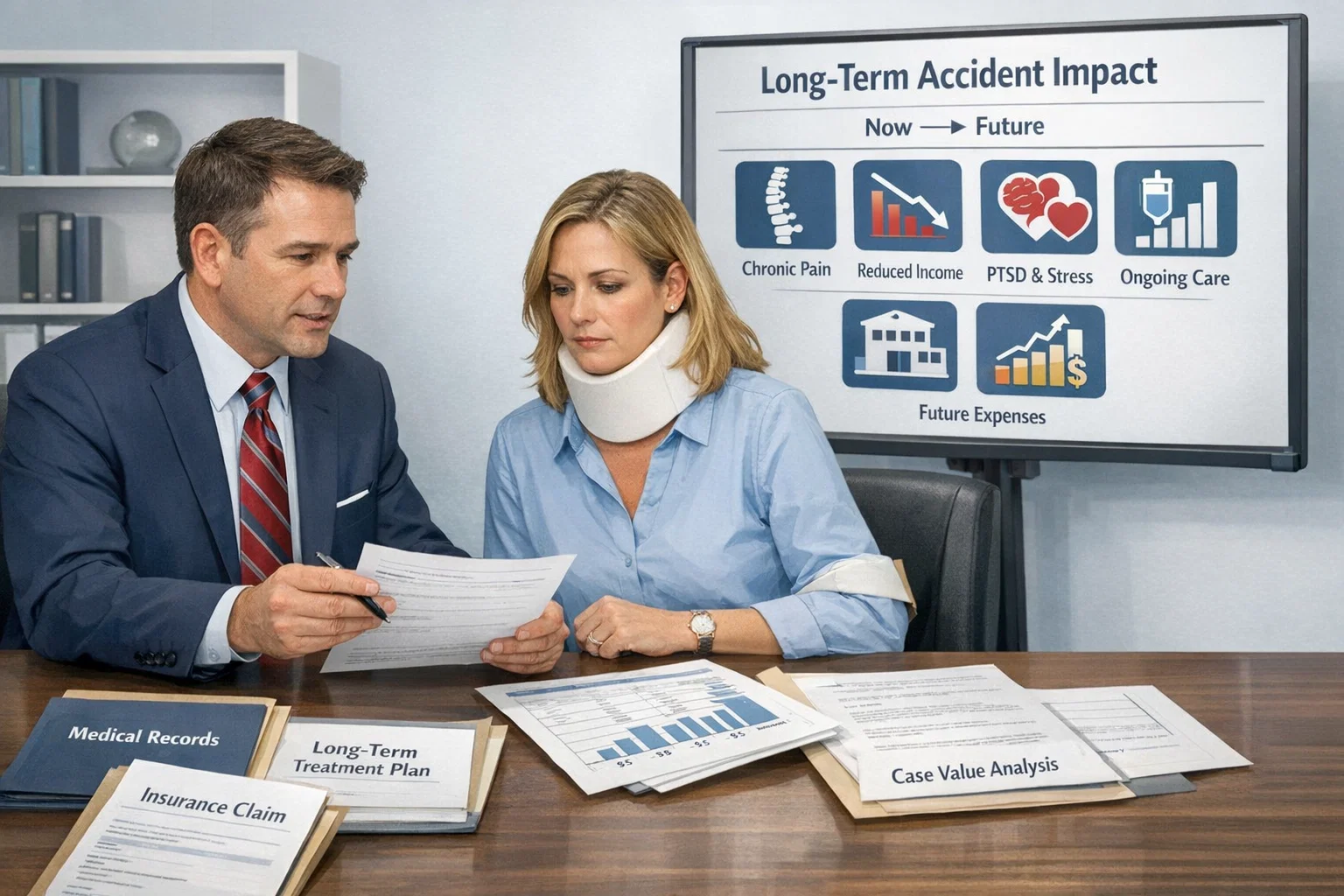
A car accident law firm helps injured people protect their legal rights, deal with the insurance company, prove negligence, document losses, and pursue compensation after a crash. Car accident law firms handle the legal and insurance work that often starts right after emergency medical care, the police report, and the first call from an adjuster.
The main benefit of working with car accident law firms is that a lawyer can build a stronger car accident claim, protect case value, and reduce costly mistakes that hurt settlement results.
These firms are used for serious injury cases, disputed fault cases, uninsured driver claims, wrongful death litigation, diminished vehicle value disputes, and complex liability investigations.
Their work usually includes case evaluation, investigation, evidence review, medical record analysis, settlement negotiation, and litigation when the insurance company refuses to pay fair compensation.
What to Do Immediately After a Car Accident
Check for injuries and call 911
Check for injuries first. Call 911 right away if anyone has pain, bleeding, loss of consciousness, breathing trouble, or signs of serious trauma. Emergency medical care at the scene creates a record that can support a later car accident case. Quick action protects health and protects evidence. A delayed response can give the insurance company room to argue that the injury was minor or unrelated. If a passenger, pedestrian, or driver has a spinal injury, do not move that person unless there is immediate danger such as fire or traffic impact.
Move to a safe location (if possible)
Move to a safe location, if the vehicles can be moved and the scene is dangerous. Pull to the shoulder, a nearby parking lot, or another protected area. Turn on hazard lights. Stay out of moving traffic. Safety comes before photographs, phone calls, or discussions with other drivers. If the vehicle cannot move, stay in the safest possible position and wait for law enforcement. A serious car accident can create chain-reaction collisions, so reducing exposure to traffic matters.
Contact law enforcement and file a police report
Contact law enforcement and ask for a formal police report. A police report often includes driver statements, witness names, road conditions, vehicle positions, and the officer’s initial observations. That report can become a key part of a negligence claim. An auto accident attorney will often review the police report early to compare it with photos, medical records, and witness accounts. If the report contains errors, a lawyer can help address those issues before the insurance company uses them against you.
Exchange information with other drivers
Exchange information with all involved drivers. Get full names, phone numbers, license plate numbers, driver’s license numbers, insurance carrier names, policy numbers, and vehicle details. If a commercial vehicle is involved, get the employer name and unit number. If the crash involved a rideshare driver, note whether the driver was using the app at the time. Do not argue about fault at the scene. Do not apologize. Fault determination should come from evidence, not from stress-driven statements.
Gather evidence at the scene
Gather evidence at the scene as soon as it is safe. Take photographs of vehicle damage, skid marks, traffic signs, weather, road defects, debris, broken glass, airbag deployment, and visible injuries. Record video if it helps show traffic flow or the scene layout. Get witness contact details. Write down the time, location, direction of travel, and what happened before impact. Strong evidence supports fault determination support, helps with policy limits discovery, and improves the ability of a car accident lawyer to prove liability.
Seek medical attention, even if you feel fine
Seek medical attention, even if you feel fine. Some injuries do not show symptoms right away. Concussions, internal bleeding, whiplash, traumatic brain injury, and soft tissue damage can appear hours or days later. A medical evaluation creates documentation that links the collision to the injury. That link matters in car accident claims. If treatment starts late, the insurance company may argue that the injury came from another event or that the condition was not serious.
Notify your insurance company
Notify your insurance company promptly. Give basic facts. Stick to the date, time, place, and involved vehicles. Do not guess about injuries. Do not estimate speed unless you know it. Do not accept blame. Do not agree to a recorded statement until you understand your rights. Insurance adjusters look for inconsistencies that reduce payout value. A personal injury lawyer can help you handle communication and protect your words from being misused.
Contact a car accident attorney
Contact a car accident attorney early. A lawyer can review liability, preserve evidence, identify missing records, calculate damages, and deal with the insurance company before the claim weakens. Many accident law firms offer a free consultation lawyer review and work on a contingency fee basis. That means the client usually pays legal fees only if the firm recovers money. Early legal help is especially useful in distracted driving accidents, commercial vehicle collisions, uninsured driver claims, aggressive driving incidents, highway defect accidents, and wrongful death cases.
The Long-Term Effects of Car Accidents
Long-Term Physical Consequences
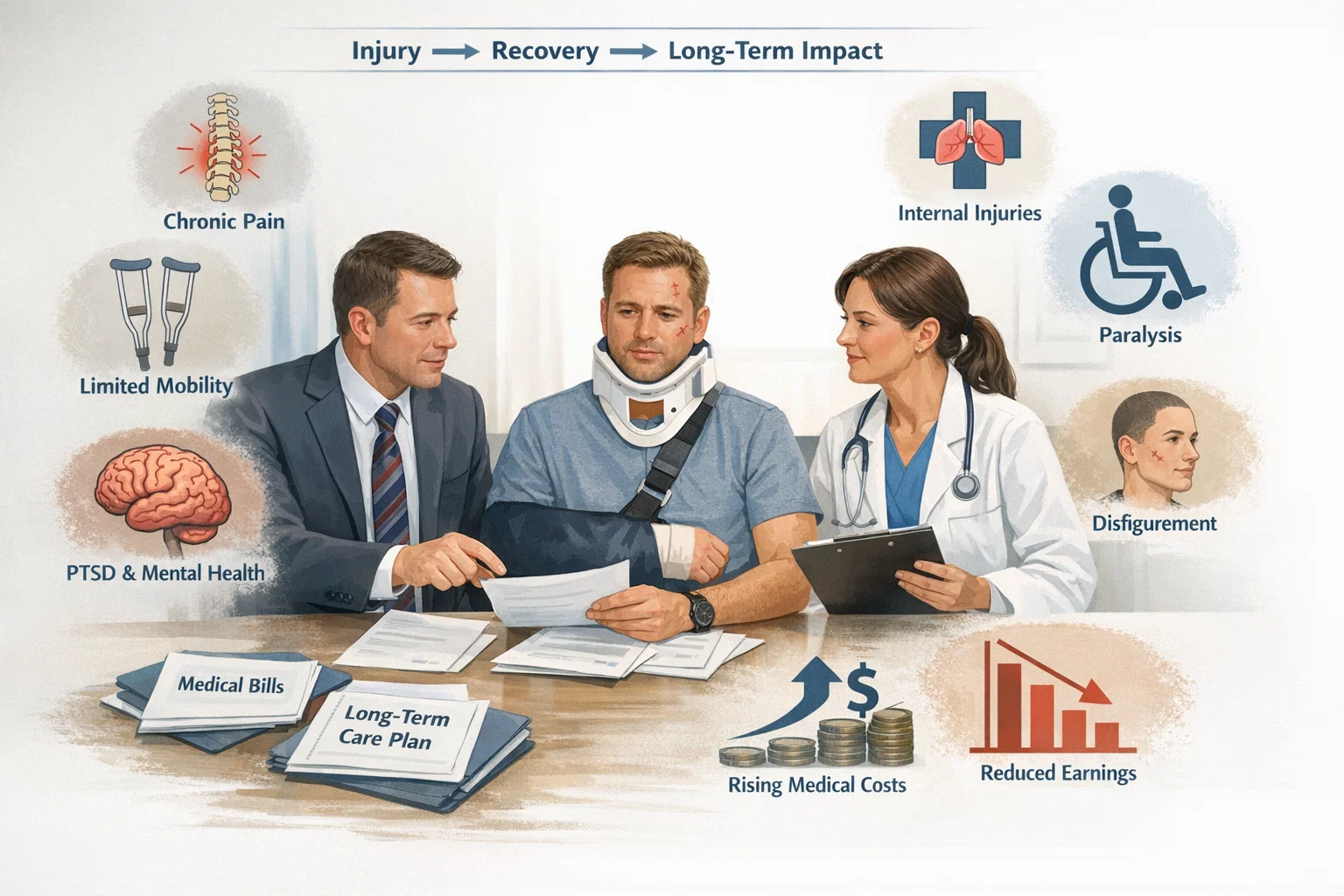
Car accidents can cause injuries that last for months, years, or life. Long-term physical harm affects work, movement, sleep, family life, and financial stability. A car accident claim should account for both current treatment and future treatment.
Chronic Pain
Chronic pain is one of the most common long-term consequences after a serious car accident. Neck pain, back pain, nerve pain, headaches, and joint pain can continue long after fractures heal or cuts close. Pain can affect sleep, concentration, mood, and the ability to work. Chronic pain often requires physical therapy, medication, injections, or pain management treatment. Those ongoing costs matter when valuing a claim.
Limited Mobility
Limited mobility can follow fractures, spinal cord injuries, torn ligaments, joint injuries, and nerve damage. A person may lose the ability to lift, bend, climb stairs, drive long distances, or return to the same job. Limited mobility can reduce independence and increase the need for home modifications, mobility aids, and long-term care support.
Organ Damage
Organ damage can occur in high-speed crashes, side-impact collisions, rollover crashes, and collisions involving seat belt compression or blunt force trauma. Damage to the lungs, kidneys, liver, or other internal organs may require surgery, monitoring, and extended recovery. Organ injuries can create hidden medical costs and long-term complications that are not obvious at the crash scene.
Paralysis
Paralysis is one of the most severe outcomes in a car accident case. Partial paralysis and full paralysis can result from spinal cord injuries or severe trauma. Paralysis changes every part of life, including earning ability, housing needs, transportation, personal care, and medical treatment. A claim involving paralysis often includes life care planning, future medical expenses, assistive technology, and long-term wage loss.
Scarring
Scarring can have physical and emotional effects. Facial scars, burns, surgical scars, and disfigurement can affect confidence, social comfort, and employment in appearance-sensitive roles. Scar revision treatment, skin graft procedures, counseling, and future cosmetic care can be part of damages in a case.
Long-Term Psychological Damage
Car accidents do not only injure the body. Car accidents can change the way a person feels, sleeps, drives, works, and interacts with others. Psychological damage can be severe after a traumatic crash, a fatal collision, or a crash involving children.
Post-Traumatic Stress Disorder (PTSD)
Post-Traumatic Stress Disorder (PTSD) can develop after a violent or frightening crash. Symptoms can include flashbacks, panic, nightmares, avoidance of driving, fear of intersections, irritability, and trouble concentrating. PTSD can interfere with work, relationships, and everyday life. Mental health treatment can include counseling, medication, trauma therapy, and long-term psychological support. A strong claim should include those treatment needs.
Overwhelming Financial Burdens
Medical bills can pile up fast after a car accident. Costs may include ambulance transport, emergency room treatment, surgery, imaging, prescriptions, rehabilitation, specialist visits, mental health care, and travel for treatment. Financial burdens grow when treatment lasts for months. A family can face debt, credit damage, and unpaid balances while the claim is still pending. This is one reason many people search for car accident law firms near me or auto accident law firm near me right after a crash.
Loss of Earnings
Loss of earnings includes missed paychecks, lost business income, used leave time, missed bonuses, reduced hours, and lower future earning capacity. A construction worker with lifting limits, a driver with back pain, or an office employee with post-concussion symptoms may not return to the same earning level. A lawyer can work to document wage loss through payroll records, tax returns, employer letters, and expert review.
Impact on Personal Relationships
A serious injury affects spouses, children, parents, and caregivers. Pain, mobility loss, sleep problems, depression, PTSD, and financial pressure can strain personal relationships. A person recovering from a collision may not be able to help with childcare, household work, transport, or emotional support in the same way as before. Those changes are real consequences of negligence and should not be ignored.
Navigating Insurance and Legal Considerations
What to Expect from Insurance After a Car Accident
Insurance companies start reviewing claims early. The goal of the insurer is to manage risk and control payout size. The goal of the injured person is to recover fair compensation. Those goals do not always match.
Reporting the accident to your insurance company
Report the accident within the required time under the policy. Give accurate facts and keep records of each call, email, claim number, and adjuster name. Save copies of all forms. Good documentation reduces disputes later.
The insurance company’s investigation process
The insurance company’s investigation process may include reviewing the police report, photos, witness statements, repair estimates, medical records, phone records, and prior claims history. The insurer may inspect the vehicle, request a recorded statement, and ask for medical authorizations. A car crash lawyer can limit overbroad requests and protect private information that is unrelated to the case.
Understanding insurance coverage & liability
Understanding insurance coverage and liability is a core part of any claim. Coverage may include bodily injury liability, property damage liability, collision coverage, medical payments coverage, personal injury protection, uninsured motorist coverage, and underinsured motorist coverage. Liability depends on facts such as traffic violations, distraction, intoxication, speeding, lane changes, road conditions, and comparative fault rules. An injury accident lawyer can review all possible coverage sources, including employer coverage in commercial vehicle collisions.
State-Specific Legal Considerations (e.g., Virginia’s contributory negligence rule)
State law matters. Virginia is known for a strict contributory negligence rule. Under that rule, a person may be barred from recovery if that person is found even slightly at fault. That makes evidence, witness consistency, and legal strategy especially important. References to Allen & Allen, Midlothian, Powhatan, Patrick, Julia, VTLA, David Irvine, and 2023 Virginia Super Lawyers often appear in discussions about regional legal representation and personal injury law in Virginia communities. A local lawyer who knows state rules can help protect a claim from technical defenses.
Who pays for medical bills after a car accident?
Medical bills may be paid through health insurance, MedPay, personal injury protection, medical liens, or a later settlement. The answer depends on the state, the policy, and the facts. In some cases, the injured person pays out of pocket first and gets reimbursed later from a settlement. In other cases, coverage applies earlier. A lawyer can review bills, negotiate medical bills, and identify payment sources that reduce immediate pressure.
Should you accept settlement offers?
Do not accept a settlement offer before you know the full value of the case. Early offers often come before full diagnosis, future treatment estimates, and wage loss analysis. A quick offer may sound helpful when bills are due, but a low settlement can leave the injured person paying future costs alone. Accepting settlement terms usually ends the claim. A car accident lawsuit lawyer can review the offer and compare it with case value.
Potential for Delayed Claims
Delayed claims create risk. Delay can affect treatment records, witness memory, vehicle evidence, and filing deadlines. Delay can also reduce bargaining power.
Impact On Insurance Coverage
A delayed claim can trigger notice defenses under the policy. The insurer may argue that late reporting limited its ability to investigate. That can affect available coverage or create more disputes over causation and timing.
Financial Liabilities From Unresolved Cases
Unresolved cases can create Financial Liabilities that continue for months or years. Medical balances, vehicle replacement costs, rental costs, and lost income do not stop while the claim is pending. That pressure often leads people to accept low offers.
Influence On Driving Record And Employment
A crash tied to citations or disputed fault can affect a driving record. A damaged driving record can affect delivery work, commercial driving jobs, insurance premiums, and some employment opportunities. Employers may review driving history for certain roles.
Long-Term Medical And Legal Costs
Long-term medical and legal costs rise when treatment is delayed, records are incomplete, or experts must reconstruct missing facts. Delay often makes a claim more expensive to prove and harder to settle.
Future Legal Risks For Defendants
Defendants face future legal risks when a case remains open. A claim can grow as treatment continues and damages become clearer. Serious injuries often look worse over time, not better, from a damages perspective.
Importance Of Documentation And Awareness
Documentation matters from the first day. Save photographs, discharge papers, prescription records, mileage logs, wage records, repair records, and communication with insurers. Good documentation protects the claim and supports settlement value.
Legal considerations for long-term accident consequences
Long-term consequences should be part of the legal analysis from the start. A personal injury attorney will usually review future treatment needs, permanent impairment, job restrictions, pain and suffering, home assistance needs, and mental health care. Serious injuries such as spinal cord injuries, traumatic brain injury, and organ damage often require expert input to estimate future costs. That analysis can be the difference between a modest settlement and a case that truly reflects lifetime harm.
Nebraska-Specific Legal Considerations
Nebraska, including Omaha, has its own insurance and negligence rules that can affect a claim. Local practice patterns, filing deadlines, and court expectations matter. References to firms such as Inkelaar Law often appear in Nebraska car accident discussions. A Nebraska claim should be reviewed through Nebraska law, not through rules from Virginia, Missouri, Arizona, or West Virginia. State-specific analysis matters in every serious injury case.
The Value of Hiring a Car Accident Attorney
Key Benefits of Working with an Attorney
The value of hiring a lawyer is practical. A lawyer manages risk, organizes evidence, and pushes the case toward a stronger outcome.
Building a Strong Legal Case
A strong legal case depends on proof. A lawyer gathers the police report, scene photos, witness statements, medical records, billing records, employment records, repair estimates, black box data when available, and expert opinions. In complex liability investigations, this work can include road design review, phone use analysis, crash reconstruction, and policy limits discovery.
Improving the Value of Your Settlement
A lawyer improves settlement value by presenting full damages, identifying future losses, and challenging weak insurer arguments. Settlement value rises when the claim shows clear liability, consistent treatment, documented losses, and credible legal pressure. A lawyer can protect the case from common errors that lower value.
Navigating Legal Obstacles
Legal obstacles include disputed fault, pre-existing condition arguments, missing records, low policy limits, uninsured driver claims, delayed symptoms, and statute of limitations issues. An experienced car accident lawyer helps the client move through those problems without losing leverage.
How an Attorney Can Help
Case Evaluation
Case evaluation is the first step. The attorney reviews what happened, what injuries are involved, what insurance may apply, and what the likely problems will be. This is often available through a free consultation lawyer process.
Case Investigation
Case investigation includes collecting photographs, crash reports, witness statements, videos, medical records, and repair records. For commercial vehicle collisions, the investigation may include driver qualification files, maintenance records, and employer policies.
Legal Guidance
Legal guidance helps the client avoid mistakes. A lawyer can advise on statements, treatment gaps, settlement offers, liens, recorded interviews, and filing deadlines. That guidance is useful whether the client is in Phoenix, AZ, Phoenix, Houston Office, Charles Town, West Virginia, Missouri, or another jurisdiction.
Documenting Damages
Documenting damages means proving every loss. That includes medical bills, lost wages, property damage, pain and suffering, diminished vehicle value, home care costs, transportation costs, and future treatment costs.
Filing Legal Documents
Filing legal documents includes claim notices, court complaints, discovery responses, motions, and settlement papers. Missing a deadline can damage or destroy a claim.
Negotiation and Settlement
Negotiation and settlement require strategy. A lawyer packages the evidence, presents damages clearly, answers defense arguments, and pressures the insurer to pay fair compensation. Good negotiation uses facts, not emotion.
Contingency Fee Arrangement
A contingency fee arrangement lets many injured people get legal representation without paying hourly fees upfront. The fee usually comes from a recovery, not from advance billing. Clients should still ask how costs, expenses, and case disbursements are handled.
Litigation
Litigation starts when settlement fails or liability is denied. Litigation can include written discovery, depositions, expert review, mediation, and trial. Not every case goes to court, but a firm that can litigate often has more leverage in negotiation.
Support and Advocacy
Support and advocacy matter during recovery. A client dealing with surgery, pain, and lost work may need regular updates, records help, and guidance on next steps. Good accident injury attorney support is practical and direct.
Understanding Case Valuation
Why Case Value Matters
Case value matters because settlement closes the claim. If the value is too low, the injured person may carry future costs alone. A fair value should reflect both present and future losses.
Key Factors Attorneys Consider
Attorneys consider fault, injury severity, treatment length, permanent impairment, surgery, future care, wage loss, occupation, age, insurance limits, credibility, witness strength, and venue risk. A wrongful death lawyer will review funeral costs, economic loss, and family damages in fatal cases.
Common Mistakes That Reduce Case Value
Common mistakes include delaying treatment, missing follow-up visits, posting about the crash on social media, giving broad medical authorizations, accepting early settlement, repairing or disposing of the vehicle too soon, and admitting fault. These mistakes make it easier for the insurance company to reduce payment.
How Attorneys Negotiate with Insurance Companies
Attorneys negotiate with insurance companies by building evidence first, valuing the case fully, identifying legal pressure points, and refusing weak offers that ignore long-term harm. Strong negotiation often includes a demand package, supporting records, legal analysis, and a credible trial threat.
Summary
Car accident law firms help injured people protect their rights, handle the insurance company, and pursue fair compensation after a crash.
The article explains what to do immediately after an accident, including calling 911, gathering evidence, and seeking medical care.
It also covers long-term effects like chronic pain, PTSD, financial burdens, and loss of income. Insurance processes, legal rules, and the risks of delayed claims are outlined clearly.
Hiring a car accident attorney can strengthen your case, increase settlement value, and support you through recovery.
