

Introduction
Personal injury law firms near me are local legal services that help injured people get advice, file claims, deal with insurance companies, and seek compensation for losses. These firms handle personal injury cases such as car accidents, truck accidents, wrongful death, slip and fall incidents, medical malpractice, and defective product liabilities.
Many personal injury lawyers offer a free consultation injury review, and some legal aid organization programs offer free or low-cost help for qualifying clients.
The main benefit of working with nearby lawyers is access to local attorneys who know local courts, state rules, filing deadlines, and insurance claim patterns in places such as Michigan, Oregon, North Carolina, Texas, and other parts of the United States.
A personal injury attorney can review liability, collect evidence, estimate damages, explain contingency fee terms, and build a path toward settlement compensation or trial.
Legal help may come from injury law firms, legal aid offices, pro bono lawyers, trial lawyers, bar associations, and public legal resources.
Finding Legal Assistance
Finding legal assistance starts with matching the legal issue to the right service. Personal injury law firms near me fit accident and negligence claims. Legal aid offices fit income-based civil help. Pro bono lawyers fit limited free representation. Lawyer directories such as Lawyer Legion and Best Lawyers can help users compare practice areas, lawyer profiles, and office locations. A person in Bellingham, Lansing, Portland, Indianapolis, Greensboro, Jacksonville, Houston, Dallas, Detroit, Boston, Atlanta, or Los Angeles should focus first on firms licensed in that state and active in that county or metro area.
Find a Lawyer for Affordable Legal Aid
Affordable legal aid comes from 3 main sources: contingency fee firms, nonprofit legal aid offices, and limited-scope private lawyers. Most personal injury lawyer services use a contingency fee. That means the client usually pays no upfront attorney fee and the lawyer is paid from a recovery, if the case succeeds. Low-cost help may come from local bar referral panels, law school clinics, and reduced-fee programs. Small personal injury law firms near me may offer more direct contact with lawyers and lower overhead than large regional offices.
Find pro bono lawyers and free and low-cost legal help
Free and low-cost legal help is often available through legal aid groups, pro bono programs, county bar associations, and court self-help centers. These services are more common for housing, family, public benefits, and disability matters than for injury claims, but some programs still help with case screening, referrals, and basic legal advice. A person looking for an accident injury lawyer should ask whether the office handles tort claims, negligence lawyer matters, or insurance disputes.
Contact a legal aid organization in your area
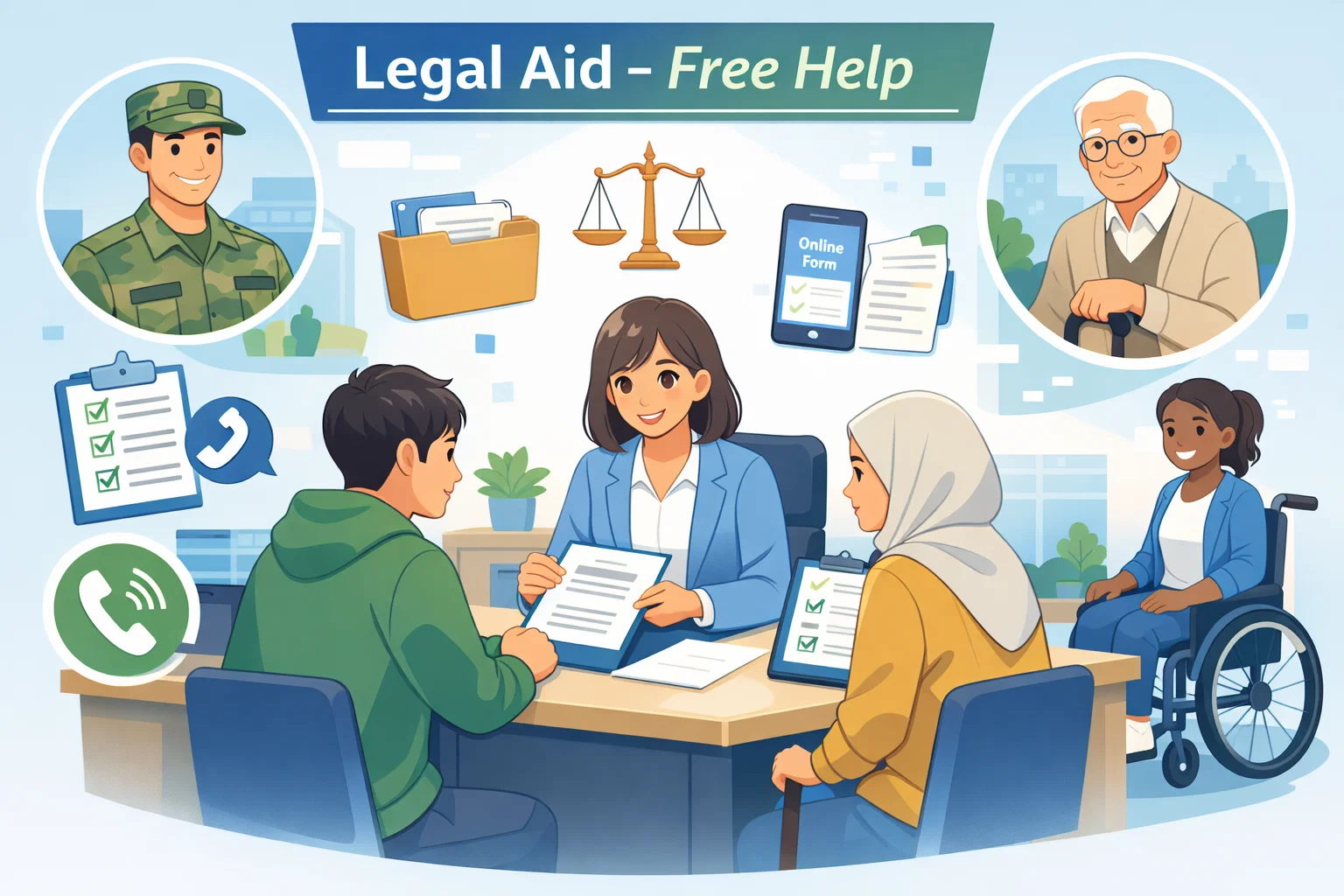
A legal aid organization in your area can explain local eligibility rules, office hours, intake steps, and case types. Many offices use phone intake, online forms, or walk-in clinics. A user can search by city or state, such as Salem, Oregon, Lansing, Michigan, Greensboro, North Carolina, or Indianapolis. The first contact should include the date of injury, names of parties involved, insurance details, police report facts, and medical treatment records.
Find legal resources for specific groups
Legal resources for specific groups help people with service-related, age-related, disability-related, and income-related legal needs. These resources do not replace a personal injury attorney, but they help users find the right entry point into the legal system.
Legal resources for military and veterans
Military members and veterans can use legal assistance offices, veterans service organizations, and state bar referral services. These resources may help with benefits, discharge matters, housing disputes, consumer issues, and referrals for a personal accident lawyer when the issue involves an off-base crash, defective products, or medical negligence outside military systems.
Legal resources for seniors
Seniors can use aging services agencies, elder law clinics, long-term care ombudsman programs, and nonprofit legal services. These services may connect seniors with lawyers for elder abuse negligence, nursing home abuse, slip and fall incidents, and financial exploitation matters. A wrongful death lawyer may be needed when neglect leads to fatal harm.
Legal resources for people with disabilities
People with disabilities can seek help from disability rights groups, legal aid offices, public protection agencies, and local attorneys who handle discrimination, benefits, access rights, and injury claims. A serious injury lawyer may work with these clients when a case involves traumatic brain injuries, spinal cord compression, unsafe premises, or transportation injuries.
Types of legal issues you can get help with
There are 6 main legal issue categories that often connect with personal injury or legal aid services: accident claims, medical negligence, workplace injuries, product defects, abuse and neglect, and public benefits issues linked to disability after injury. Injury law firms focus on compensation claims. Legal aid groups often focus on access, safety, and civil stability issues that follow the injury.
Personal Injury Law Overview
Personal injury law covers civil claims for physical, emotional, and financial harm caused by another party. A personal injury claim usually requires proof of duty, breach, causation, and damages. A personal injury lawyer helps the client show how the defendant’s conduct caused the injury and how that injury created medical bills, lost wages, pain and suffering, and future medical expenses. Claims may settle before filing suit, during litigation, or after trial preparation.
Why Should I Hire a Personal Injury Lawyer?
You should hire a personal injury lawyer to protect your claim, value your damages correctly, and deal with the insurance company from day one. Insurance adjusters look for gaps in treatment, weak evidence, recorded statements, and low settlement leverage. An experienced injury lawyer can preserve evidence, obtain records, work with experts, calculate lost earning capacity, and push back against insurance denials. A lawyer can also identify extra coverage sources, including uninsured motorist advocates and commercial policies.
Do I Have a Personal Injury Case?
You may have a personal injury case when another party caused harm and that harm created measurable losses. Those losses can include medical costs, lost income, reduced earning power, pain and suffering, and impaired quality life. A case review should examine fault, evidence, injury severity, treatment history, and insurance coverage.
Elements of a Personal Injury Claim
There are 4 basic elements of a personal injury claim: duty, breach, causation, and damages. Duty means a legal obligation existed. Breach means the obligation was violated. Causation means the violation caused the injury. Damages means the injury produced actual losses. A negligence lawyer must prove all 4 elements for most standard claims.
Legal Definition of “Intentional Torts”
Intentional torts are civil wrongs caused by deliberate acts. Common examples include assault, battery, false imprisonment, and some sexual abuse claims. These cases differ from negligence claims because the harmful act is intentional rather than careless.
Legal Definition of “Negligence”
Negligence is the failure to use reasonable care under the circumstances. A driver who texts and causes a crash, a property owner who ignores a dangerous spill, or a business that fails to repair broken stairs may be negligent. Negligence is the core theory in many car accident lawyer, truck accident lawyer, and premises liability lawyers cases.
Definition of “Strict Liability”
Strict liability is liability without proof of ordinary negligence in certain situations. The main examples are abnormally dangerous activities and some product defect cases. In these cases, the focus is on the defective or dangerous condition and the harm that followed.
Definition of “Products Liability”
Products liability is the area of law that holds manufacturers, distributors, and sellers responsible for dangerous products. Defective products may have design defects, manufacturing defects, or warning defects. These cases often involve defective product liabilities, recalls, expert analysis, and serious injury claims.
Definition of “Recovering Damages”
Recovering damages means obtaining money compensation for losses caused by the injury. Damages may include medical expenses, rehabilitation costs, lost wages, future medical expenses, lost earning capacity, property damage, and pain and suffering. In fatal cases, damages may include wrongful death compensation.
Types of Personal Injury Cases
Personal injury law firms near me often handle more than a dozen claim types. The right firm depends on the injury source, claim size, and litigation demands.

Car Accidents
Car accidents are the most common personal injury cases. A car accident lawyer handles rear-end collisions, intersection crashes, uninsured driver claims, hit-and-run losses, and disputed liability cases. These claims often involve police reports, medical records, repair data, witness statements, and insurance policy analysis.
Truck Accidents
Truck accidents often involve larger policies, federal safety rules, black box data, driver logs, maintenance records, and company liability. A truck accident lawyer may pursue the driver, motor carrier, broker, shipper, or maintenance contractor. These are often complex litigation specialists matters.
Motorcycle Accidents
Motorcycle accidents often lead to severe injuries, including fractures, road rash, traumatic brain injuries, and spinal damage. A motorcycle accident lawyer must often fight bias from insurers that try to place fault on the rider.
Bicycle Accidents
Bicycle accidents can involve vehicle strikes, unsafe lanes, dooring incidents, defective bike parts, and road hazards. Bicycle accident expertise matters in cases involving traffic camera footage, helmet issues, and local road design facts. These claims often need pedestrian safety advocates and bicycle-focused evidence review.
Catastrophic Injuries
Catastrophic injuries include permanent brain injury, paralysis, amputation, major burns, and severe organ damage. These claims require detailed work on future medical expenses, home care costs, life-care planning, and lost earning capacity. A serious injury lawyer is often needed.
Medical Malpractice
Medical malpractice cases involve negligent care by doctors, hospitals, nurses, or other medical providers. A medical malpractice lawyer handles misdiagnosis, surgical errors, medication mistakes, delayed treatment, and birth injury events. These cases require expert review and strict procedural compliance.
Nursing Home Abuse
Nursing home abuse claims involve neglect, dehydration, falls, medication errors, pressure injuries, and physical abuse. These cases often combine elder abuse negligence with corporate record review and staffing analysis.
Workplace Accidents
Workplace accidents include construction site injuries, machine injuries, falls, electrocution, toxic exposure, and transportation accidents on the job. Some claims stay within workers’ compensation. Some claims allow third-party suits against contractors, property owners, or equipment makers.
Workers’ Compensation
Workers’ Compensation covers medical care and wage-related benefits for job injuries, regardless of ordinary fault in many cases. A workers compensation lawyer helps with denied claims, disability ratings, employer disputes, and appeal hearings. A worker may have both a comp claim and a third-party injury claim.
Wrongful Death
Wrongful death claims arise when a person dies from another party’s wrongful act. A wrongful death lawyer seeks damages for funeral costs, lost financial support, and the value of the relationship under state law. These cases require fast evidence preservation and estate-related coordination.
Slip and Fall Accidents
Slip and fall accidents are a major part of premises liability lawyers work. These cases involve wet floors, broken handrails, loose flooring, poor lighting, uneven sidewalks, and unsafe stairs. Success often depends on notice evidence, inspection records, photographs, and witness proof.
Defective Products
Defective products cases involve unsafe vehicles, tools, appliances, drugs, medical devices, and consumer goods. A product liability firm will examine warnings, design choices, testing history, and recall records.
Birth Injuries
Birth injuries involve trauma during pregnancy, labor, delivery, or immediate newborn care. These cases may involve oxygen deprivation, delayed C-section events, medication errors, or instrument misuse. They require expert testimony and long-term damages analysis.
Sexual Abuse
Sexual abuse claims may be brought against the abuser and, in many cases, against institutions that failed to protect the victim. These claims can involve schools, care facilities, youth groups, transport providers, and workplaces. Privacy protections and trauma-informed representation matter in these cases.
Personal Injury FAQs
Personal injury FAQs usually focus on 6 questions: Do I have a case, how much does it cost, how long will it take, what is my case worth, should I speak to insurance, and when should I hire a lawyer. The direct answers are simple. A case depends on fault and damages. Most firms charge contingency fees. Time depends on treatment and dispute level. Value depends on losses and liability proof. Recorded statements should be handled carefully. A lawyer should be contacted as early as possible.
How to Hire a Personal Injury Lawyer
Hire a personal injury lawyer by taking 5 steps. Check state licensing. Review practice focus. Ask about trial work. Ask who handles the file day to day. Ask how fees and costs work. A user searching personal injury attorney near me reviews or top personal injury law firms near me should compare communication style, litigation history, office access, and case fit. A large firm may have deep resources. A small firm may offer closer lawyer contact.
What to Do After a Personal Injury
Do 7 things after a personal injury. Get medical care. Report the event. Take photos. Gather witness names. Save bills and records. Avoid detailed statements to insurers. Contact a personal injury attorney. Fast action helps preserve evidence and reduces claim damage.
What Are Recoverable Damages for a Personal Injury?
Recoverable damages for a personal injury usually include 7 categories: emergency care costs, ongoing medical treatment, lost wages, future medical expenses, lost earning capacity, pain and suffering, and property damage. Some cases include disfigurement, loss of consortium, and punitive damages where allowed.
How Much is My Personal Injury Case Worth?
Your personal injury case is worth the total amount of provable losses adjusted by liability strength, insurance limits, and injury impact. Case value depends on 6 main factors: medical severity, treatment length, missed work, future care needs, fault evidence, and policy limits. A minor soft-tissue claim may settle for a smaller amount. A catastrophic injury with permanent disability may involve a much larger demand.
What Is the Time Limit for Personal Injury Lawsuits?
The time limit for personal injury lawsuits is the statute of limitations set by state law. The exact deadline changes by state and by claim type. Medical malpractice, claims against government entities, wrongful death, and claims involving minors may have different rules. A person should contact local attorneys immediately after an injury to avoid losing the claim.
How Is Liability Determined in a Personal Injury Claim?
Liability is determined by evidence showing who had a duty, who breached it, and how that breach caused injury. Key proof includes photos, incident reports, expert opinions, witness statements, video footage, vehicle data, maintenance records, and medical records. Comparative fault rules may reduce recovery when the injured person shares blame.
Compensation and Liability in Personal Injury Cases
Compensation and liability in personal injury cases depend on the facts, the law, and the available insurance. A claim with strong evidence and serious damages has more settlement pressure. A claim with weak causation or disputed fault has lower value. An accident attorney builds leverage by organizing evidence early and showing the insurer or defense lawyer the trial risk.
Why Work with Personal Injury Attorneys?
Work with personal injury attorneys to improve case preparation, settlement leverage, and claim accuracy. Personal injury attorneys know filing rules, evidence demands, negotiation patterns, and jury-risk pressure points. They work with experts, investigators, paralegals, and case managers. They help clients avoid low offers and missed deadlines.
Dedicated Lawyers Serving
Dedicated lawyers serving injured clients should offer clear intake, direct answers, organized evidence review, and steady communication. Some consumers search firms by city and brand, such as The Gatti Law Firm, Smith & Hassler, MAXOUT Injury Lawyers, TOPDOG, Rob King & Associates, Attorney Bill COATS, or lawyers such as Rob Kline. Office searches may include Bellingham, Lansing, Salem, Portland, Indianapolis, Carmel, Greensboro, Humble, Leesville, and major metros such as Atlanta, Baltimore, Baton Rouge, Birmingham, Boca Raton, Boston, Bronx, Brooklyn, Buffalo, Charlotte, Chicago, Cleveland, Central Phoenix, Dallas, Denver, Detroit, Houston, Jackson, Jacksonville, Jupiter, Kansas City, Knoxville, Little Rock, Los Angeles, Memphis, Milwaukee, and New Orleans. Users should verify each lawyer’s state license, office location, and current practice focus before hiring.
Caring and Professional Lawyers
Caring and professional lawyers answer calls, explain next steps, return updates, and treat clients with respect. Good service includes honest case screening, realistic value discussion, and clear fee terms. Experienced trial attorneys and aggressive claim strategists can still provide careful client service.
Our Approach & Philosophy
Our approach and philosophy should center on 5 points: honest case review, fast investigation, careful damages proof, direct communication, and strong negotiation or litigation when needed. A personal injury law firm should not promise results. A personal injury law firm should promise work, clarity, and preparation.
What Happens When You Contact a Law Firm?
Contacting a law firm usually starts with a call, web form, or live chat. The firm gathers facts, checks conflicts, reviews injury basics, and decides whether the matter fits the practice. Then the firm explains fees, next steps, and document needs.
Free Case Review
A free case review is the first screening step. The firm asks about the accident date, injuries, treatment, insurance, and fault facts. This review helps determine whether a personal injury case exists and whether the firm can help.
Case Investigation
Case investigation includes record collection, witness outreach, photo review, video review, policy checks, expert consultation, and timeline building. Strong investigation is the base for maximizing settlement amounts.
Case Management
Case management means ongoing file handling through treatment updates, records requests, medical bill tracking, court deadlines, and insurance communications. Case managers, paralegals, and legal assistants often support this work.
Pursuing Compensation
Pursuing compensation involves demand preparation, negotiation, filing suit when needed, discovery, mediation, and trial preparation. Good firms balance fast progress with complete damages proof.
Summary
Personal injury law firms near me provide legal help for accident victims by handling claims, proving negligence, and securing compensation for damages.
These firms manage cases such as car accidents, slip and fall incidents, medical malpractice, and wrongful death.
A personal injury lawyer helps collect evidence, deal with insurance companies, and maximize settlement amounts.
Most injury law firms work on a contingency fee, so clients pay only if they win. Local attorneys offer better knowledge of courts, laws, and deadlines, making it easier to build a strong case and recover damages like medical expenses, lost income, and pain and suffering.