

Intro
An elementary education degree online is a college degree in Elementary Education that delivers most coursework through an online learning environment while preparing you to teach young learners in an elementary school setting.
The degree focuses on child development, classroom management, literacy instruction, mathematics education, science education, social studies, assessment strategies, and educational technology. Many online degree programs also include supervised fieldwork or student teaching so graduates can meet state licensure standards.
Online Elementary Education Degree Programs
Online elementary education degree programs vary by school. Some follow semester schedules like traditional universities. Some use competency-based models. Some offer transfer pathways such as an Elementary Education Online Transfer Program or a 2+2 Elementary Education program.
Well-known online pathways that students often compare include Western Governors University (WGU) options, Liberty University Online programs like Liberty’s Online Bachelor of Education (B.Ed.) in Elementary Education Degree, and public university online divisions such as University of Florida Online (UF Online).
Students also compare campus-based schools with online options, including Valdosta State University (VSU), Ohio State University (OSU), and University of Northern Iowa (UNI).
Program names also vary, including Bachelor of Arts (BA), Bachelor of Arts in Education in Elementary Education Degree, Bachelor of Arts in Elementary Education, and Bachelor of Science in Education – Applied Elementary Education.
Program Overview
An online bachelor’s degree in Elementary Education is designed to build teaching skills for grades commonly covered by elementary licensure. Many programs align with Teacher Certification in Early Childhood Through Grade Six. In Texas, the pathway may be described as an EC-6 program (Early Childhood–Grade 6). Your state licensure office and your admissions office are the two places that can confirm the exact credential route.
Some programs offer related tracks or alternatives, such as:
- Bachelor of Arts in Special Education or Special Education General Curriculum
- Middle Grades English, Middle Grades Mathematics, Middle Grades Science, and Middle Grades Social Science pathways
- Instructional Aide Pathway options for students already working in schools
Key Features and Benefits

Flexible Online Classes
Flexible online classes let you complete lectures, readings, quizzes, and discussion work on a schedule that fits full-time jobs and family needs. Many programs use a learning management system that supports recorded lessons, live sessions, and weekly deadlines.
Affordable Tuition
Affordable online degree costs vary by school, but online programs often keep costs stable and publish tuition breakdowns clearly. If cost is the priority, compare total program cost, fees, technology costs, and whether you will need travel for virtual field experiences or on-site placements.
Designed for Working Professionals
Many online teaching degree options are structured for working adults. A common format is a predictable weekly rhythm, clear rubrics, project based assessments, and strong online student mentoring. Some programs are paced term-by-term; others are self-paced.
Hands-On Experience
Even with a fully online format, teacher education online programs usually require hands-on experience. Hands-on experience can include classroom observation hours, virtual field experiences, practicum work, and student teaching in a school near your city and state. Licensure-track programs typically require these hours to meet state standards.
Unparalleled Support
Support can include academic advising, tutoring, writing support, licensure coaching, and placement support for field experiences. Ask the admissions office what support services are included, what response times look like, and what happens if placement in a local district takes longer than expected.
Curriculum and Coursework
The curriculum is built around teaching methods and learning theories, with strong focus on literacy instruction, mathematics education, classroom management, assessment strategies, and inclusive practices for special education and English as a Second Language.
Core Courses
Core courses in an elementary teacher education degree often cover:
- Child development and childhood development expertise
- Classroom management and inclusive classroom management
- Literacy instruction, early literacy intervention, and reading methods
- Mathematics education and instructional planning
- Science education and social studies methods
- Assessment strategies and project based assessments
- Educational technology and digital citizenship instruction
- Family engagement strategies and culturally responsive pedagogy
- Accessible special education and neurodiversity inclusive classrooms
- Trauma informed teaching and equitable learning opportunities
Sample Elementary Education Courses
Sample course titles vary, but many online elementary education programs include courses like:
- Foundations of Elementary Education
- Curriculum Development and Personalized Curriculum Design
- Literacy Methods and Reading Assessment
- Methods of Teaching Mathematics in Elementary School
- Science and STEAM Focused Curriculum Planning
- Social Studies Methods and Civic Education
- Classroom Assessment and Data Use
- Teaching Students With Disabilities (Special Education)
- English for Speakers of Other Languages (ESOL) Methods
- Educational Psychology and Learning Theories
- Practicum / Field Experience / Student Teaching Seminar
Course Highlights
Course highlights often include practical artifacts you build across the program:
- Lesson plans aligned to standards
- Reading and writing mini-unit plans
- Classroom management plans
- Assessment plans and rubrics
- Differentiation plans for special education and ESOL
- Family communication templates
- Digital citizenship instruction materials for elementary learners
Coursework Preview
Coursework preview usually includes discussion posts, short reflection writing, quizzes, recorded micro-teaching videos, and unit planning projects. Some programs include adaptive learning integration to adjust practice questions and readings to your progress. Many programs also include online student mentoring and feedback cycles so you improve instruction step-by-step.
Degree Requirements
Degree requirements depend on whether the program is licensure-track. A non-licensure online education degree for teachers may focus on theory and curriculum. A licensure pathway requires student teaching and specific assessments.
Total Credit Hours
Most bachelor’s programs land in the 120 credit hour range, but the exact total credit hours depend on transfer credits and the school’s general education structure. Confirm credit hour requirements in writing before you enroll, and confirm how transfer credits apply.
Learning Outcomes
A strong online elementary education degree program aims to produce graduates who can:
- Plan standards-aligned lessons for elementary grades
- Teach reading, writing, and early literacy intervention effectively
- Teach math, science, and social studies with clear objectives
- Manage a classroom using inclusive classroom management methods
- Use culturally responsive pedagogy and equitable learning opportunities
- Support neurodiversity inclusive classrooms and accessible special education
- Teach English for Speakers of Other Languages (ESOL) learners with appropriate scaffolds
- Use assessment data to adjust instruction
- Build strong family engagement strategies and communication routines
- Use educational technology and digital citizenship instruction safely and responsibly
Program Outcomes
Program outcomes often include licensure readiness, job placement support, and evidence of competence in real classrooms. For licensure-track students, program outcomes typically include completing fieldwork, passing required exams (varies by state), and meeting student teaching performance expectations.
Faculty
Faculty quality matters in online learning. Strong faculty teams are active in feedback, office hours, and coaching around classroom practice.
Dedicated and Supportive Faculty
Dedicated and supportive faculty usually show up as timely feedback on lesson plans, practical examples from current schools, and clear expectations. Ask if the program assigns a faculty mentor and what faculty-to-student ratios look like for practicum and student teaching support.
Meet Our Faculty
Many schools publish faculty bios with research interests like literacy, inclusive practices, and early childhood advocacy. Some programs highlight faculty who focus on rural education specialization or urban education challenges, since classroom needs differ by community.
Faculty Spotlight
If a program highlights a faculty member such as Dr. Sonya Vierstraete, read the faculty spotlight to understand the teaching philosophy, research focus, and how the faculty member supports teacher candidates. Faculty fit can matter as much as course titles.
Admissions and Enrollment
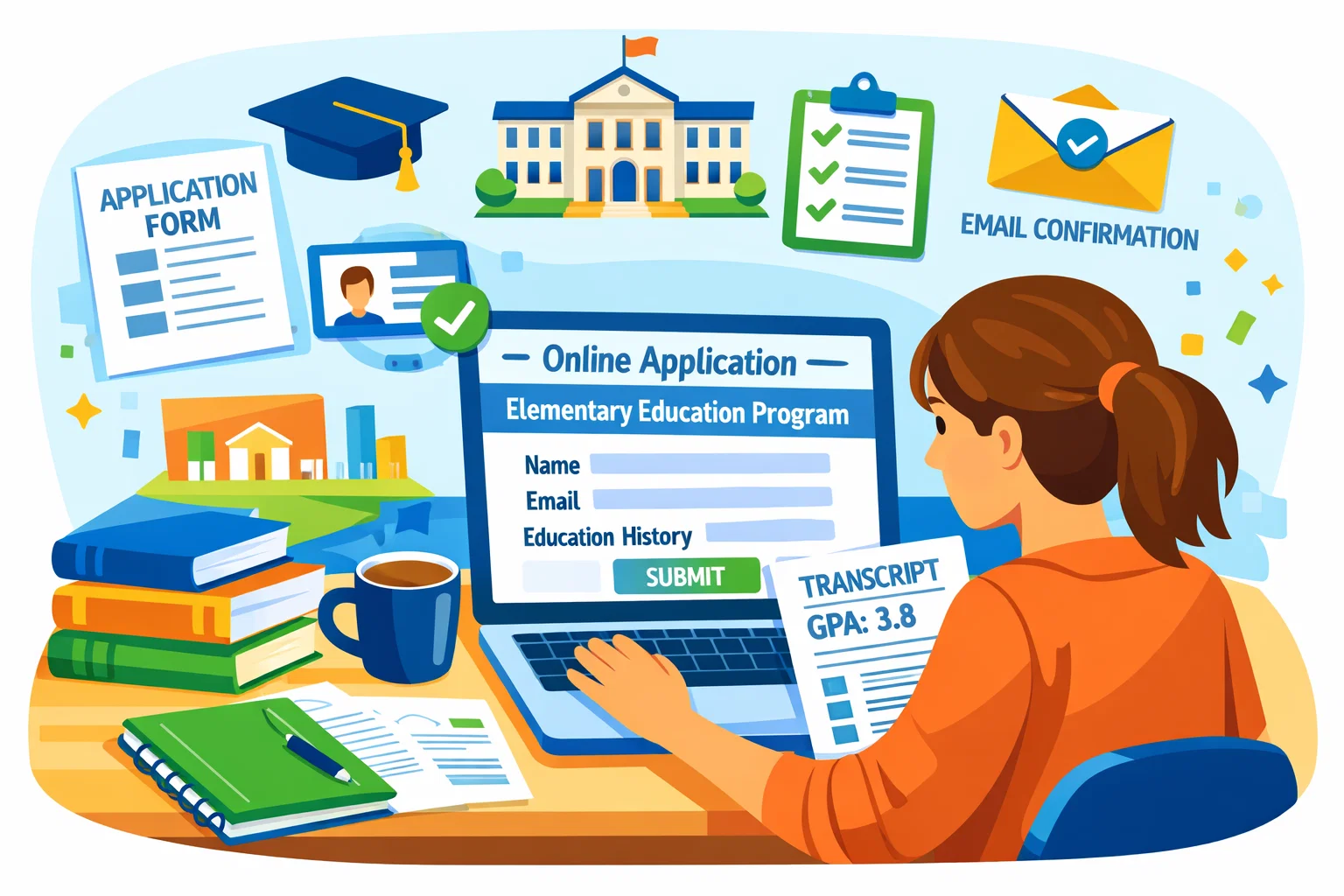
Admissions and enrollment steps are usually straightforward: confirm requirements, send transcripts, complete any background checks if required for field experiences, and meet with an advisor.
Admission Requirements
Admission requirements vary by school and by whether you are entering as a first-time college student or a transfer student.
General Requirements
General requirements often include:
- Application form and application fee (varies)
- High school transcript policy requirements for first-time students
- Minimum GPA requirements (varies by school)
- Basic skills requirements (some states or programs require this)
- Background check requirements for school placements (varies by state/district)
Transfer Credits
Transfer credits can lower total cost and time to completion. Schools often ask for:
- Unofficial college transcript policy submission for initial review
- Official college transcript policy submission for final evaluation
Ask for a written transfer credit evaluation, including how credits apply to the B.S. in Education – Applied Elementary Education or BA plan. Some schools also publish an Elementary Education Online Transfer Program that maps common community college courses into the degree.
International Students
International students should confirm:
- International applicants documentation requirements
- Credential evaluation rules
- English proficiency expectations (varies)
- Whether the program leads to state licensure or is degree-only
If your long-term goal is teaching in a specific country, confirm that an online degree will be recognized and what additional steps are required.
Tuition and Financial Aid
Tuition planning is easier when you separate tuition cost, fees, books, and any travel or testing expenses.
Affordable Tuition Options
Affordable tuition options can include flat-rate terms, per-credit tuition, transfer credit strategies, and employer tuition support. Schools like WGU may use competency-based tuition structures, while many traditional universities price per credit hour.
Financial Aid & Scholarships
Financial aid & scholarships may include federal aid (if eligible), state aid (if eligible), institutional scholarships, and grants. Confirm how aid applies if you take fewer or more credits per term.
Military Benefits
Military benefits can include tuition assistance, GI Bill eligibility, and credit for training where applicable. If you are transferring from military training or a military college pathway, ask about military transfers and how credits map into education requirements.
How to Apply
Most “how to apply” steps look like this:
- Choose the degree plan: Bachelor of Arts (BA) or Bachelor of Science in Education – Applied Elementary Education (program names vary).
- Confirm whether the track is licensure-track for an online elementary school teaching degree.
- Submit the application and required transcripts.
- Complete placement-related steps (background check, fingerprinting) if required.
- Meet your advisor and build a term plan.
Licensure and Career Paths
Licensure and career planning should start before you enroll, because state licensure rules affect coursework, tests, and field placement requirements.
Becoming a Licensed Teacher
Becoming a licensed teacher typically requires:
- Completing an accredited program aligned to teacher certification
- Completing student teaching or supervised clinical practice
- Passing state-required exams (varies)
- Meeting state requirements for ethics training or background checks
State Licensure Requirements
State licensure requirements vary widely. If your search intent includes “elementary education degree online alabama,” “elementary education degree online florida,” “elementary education degree online georgia,” “elementary education degree online ohio,” “elementary education degree online texas,” or similar, the first step is the same: confirm the exact state licensure pathway with that state’s department of education and confirm your program is approved for that state.
Programs may list a “state authorization” page. Read it carefully, and confirm whether the program supports placements in your city and state.
Potential Career Options
An online degree in Elementary Education supports several career paths, depending on licensure and endorsements.
Career Outlook
Elementary education jobs include classroom teaching roles and support roles. Common options include:
- Elementary school teacher (licensed role)
- Instructional aide (may not require licensure, varies by district)
- Literacy intervention support roles (varies by state)
- Curriculum support and tutoring roles
- After-school program educator
- Education nonprofit roles focused on early childhood advocacy
Job outlook depends on state needs, district hiring, and endorsements.
Elementary Education Teaching Credentials
Credentials can include base licensure plus endorsements.
Endorsements (e.g., ESOL, Reading)
Common endorsements include:
- English for Speakers of Other Languages (ESOL)
- Reading
- Special education add-ons (varies)
Endorsements can expand job options and can align with program tracks like Special Education General Curriculum.
Summary
An elementary education degree online is a bachelor’s degree program that prepares students to become elementary school teachers through flexible online coursework.
The program teaches child development, classroom management, literacy instruction, mathematics education, science education, and social studies methods. Many programs include supervised student teaching to meet state licensure requirements.
Online elementary education programs allow working professionals to study through flexible schedules while completing the same teaching curriculum offered by traditional universities. Graduates can pursue careers as elementary school teachers, instructional aides, literacy specialists, or education support professionals.