

Introduction
Finding the cheapest full coverage auto insurance quotes in Florida means finding a policy that protects your car well without paying more than necessary. Full coverage usually includes liability insurance, collision coverage, and comprehensive coverage. In Florida, many drivers also carry personal injury protection (PIP) because state rules require it for most vehicles.
The best cheap policy is not only the lowest monthly premium. The best cheap policy gives you strong protection, a deductible you can afford, and coverage that fits your car, your budget, and your driving risk. That is why Florida drivers should compare quotes carefully instead of choosing the first offer.
This guide explains what full coverage means, what affects rates in Florida, how to compare quotes, and how to lower your premium while keeping useful protection.
What Is Full Coverage Auto Insurance In Florida?
Full coverage auto insurance in Florida usually means liability, collision, and comprehensive coverage on one policy. This type of policy gives broader protection than minimum coverage.
Here is what each part does:
Liability Insurance
Liability insurance pays for damage or injuries you cause to other people. This part protects you if you cause an accident and another driver, passenger, or property owner makes a claim.
Collision Coverage
Collision coverage pays for damage to your own car after a crash, no matter who caused the accident. This coverage matters if your vehicle still has strong market value or if you could not easily pay for repairs yourself.
Comprehensive Insurance
Comprehensive insurance pays for non-collision losses. This often includes theft, vandalism, fire, storm damage, falling objects, and some animal-related damage.
Personal Injury Protection
Florida drivers usually need personal injury protection. PIP helps cover medical expenses and certain lost wages after an accident.
Why Full Coverage Matters In Florida
Full coverage matters in Florida because minimum coverage leaves major gaps. A minimum policy may help you meet legal requirements, but minimum coverage does not protect your own car from crash damage, theft, flood loss, or storm damage.
Florida drivers face several risks that make full coverage worth considering:
- Heavy traffic in many cities
- Expensive repair costs
- Uninsured or underinsured drivers
- Storm and weather-related vehicle damage
- Theft and vandalism in some ZIP codes
If your car is financed or leased, your lender will usually require full coverage. If your car is fully paid off, full coverage is still useful when replacing or repairing the vehicle would be a financial problem.
What Makes Florida Car Insurance Expensive

Florida car insurance is expensive because claim costs, traffic density, weather risk, and driver profile differences all push premiums higher. Two drivers with the same car can still receive very different quotes.
The biggest pricing factors include:
ZIP Code
Your location changes your premium. A driver in a busy metro area often pays more than a driver in a quieter town. Insurers look at local accident frequency, theft risk, claim history, and repair costs.
Driving Record
A clean record usually gets the cheapest rates. One speeding ticket, one at-fault accident, or one DUI can push your premium much higher.
Age And Experience
Young drivers often pay the highest rates because they are statistically riskier to insure. Mature drivers with clean records usually get better pricing.
Vehicle Type
The make, model, year, value, and repair cost of your car affect your quote. A luxury vehicle, sports car, or newer SUV often costs more to insure than an older sedan.
Coverage Limits
Higher liability limits usually raise the premium. Full coverage with stronger limits costs more than a bare-bones policy, but it also gives better financial protection.
Deductible
A higher deductible usually lowers your monthly premium. A lower deductible raises your premium but reduces what you pay out of pocket when you file a claim.
Insurance History
Drivers with continuous insurance coverage often get better pricing than drivers with a lapse in coverage.
How To Find The Cheapest Full Coverage Auto Insurance Quotes In Florida
The best way to find the cheapest full coverage auto insurance quotes in Florida is to compare the same coverage setup across multiple insurers. Do not compare random quotes with different deductibles and different limits. That creates a false comparison.
Use this process:
1. Compare The Same Coverage Limits
Always quote the same limits with each insurer. Use the same liability amounts, the same collision deductible, and the same comprehensive deductible.
2. Check At Least Five Quotes
Do not stop at one or two quotes. Florida prices can vary a lot between companies. A difference that looks small each month can become a large yearly cost.
3. Review Deductible Options
Try different deductible amounts. Many drivers save money by increasing the deductible from a lower level to a higher one. Do this only if you could actually pay that amount after an accident.
4. Ask About Discounts
Discounts can reduce your premium without cutting coverage. Common discounts include:
- Safe driver discount
- Multi-car discount
- Good student discount
- Paperless billing discount
- Auto-pay discount
- Telematics or usage-based discount
- Bundling discount
5. Compare Monthly And Annual Cost
Some insurers offer a lower total price if you pay in full instead of paying month to month.
6. Review Optional Add-Ons
Roadside assistance, rental reimbursement, and similar extras can help, but not every driver needs every add-on. Keep the options that match your real needs.
Cheapest Full Coverage Does Not Mean Lowest Protection
The cheapest full coverage policy should still protect you properly. A quote that looks cheap can become expensive later if it comes with weak liability limits or a deductible that is too high for your budget.
When comparing policies, look at these points:
- Liability limits
- Collision deductible
- Comprehensive deductible
- Uninsured motorist options
- Rental car coverage
- Roadside assistance
- Claim service quality
Price matters, but coverage details matter too. A lower premium is only helpful if the policy still works when you need it.
Full Coverage Vs Minimum Coverage In Florida
Minimum coverage is cheaper, but full coverage protects your own vehicle. That is the biggest difference.
Minimum coverage may only help with state-required protection. Full coverage adds protection for your own car.
Choose minimum coverage only when:
- Your car has very low value
- You could replace the car without major financial stress
- You want the lowest legal cost and accept more risk
Choose full coverage when:
- Your car is financed or leased
- Your car still has good market value
- You depend on the vehicle daily
- You want protection against crash and non-crash losses
- Paying for repairs yourself would be difficult
Is Full Coverage Worth It On An Older Car?
Full coverage on an older car is worth it only when the cost still makes sense compared with the value of the vehicle. If your car is older and worth very little, full coverage may no longer be cost-effective.
Ask these questions:
- What is the current value of the car?
- How much does collision and comprehensive add to the premium?
- Could you replace the car if it were totaled?
- Is theft or storm damage a real risk in your area?
If the yearly cost of full coverage is too close to the value of the car, dropping collision may make sense. Many Florida drivers still keep comprehensive on older cars if theft or weather damage is a concern.
Best Cheap Full Coverage Options For Different Drivers
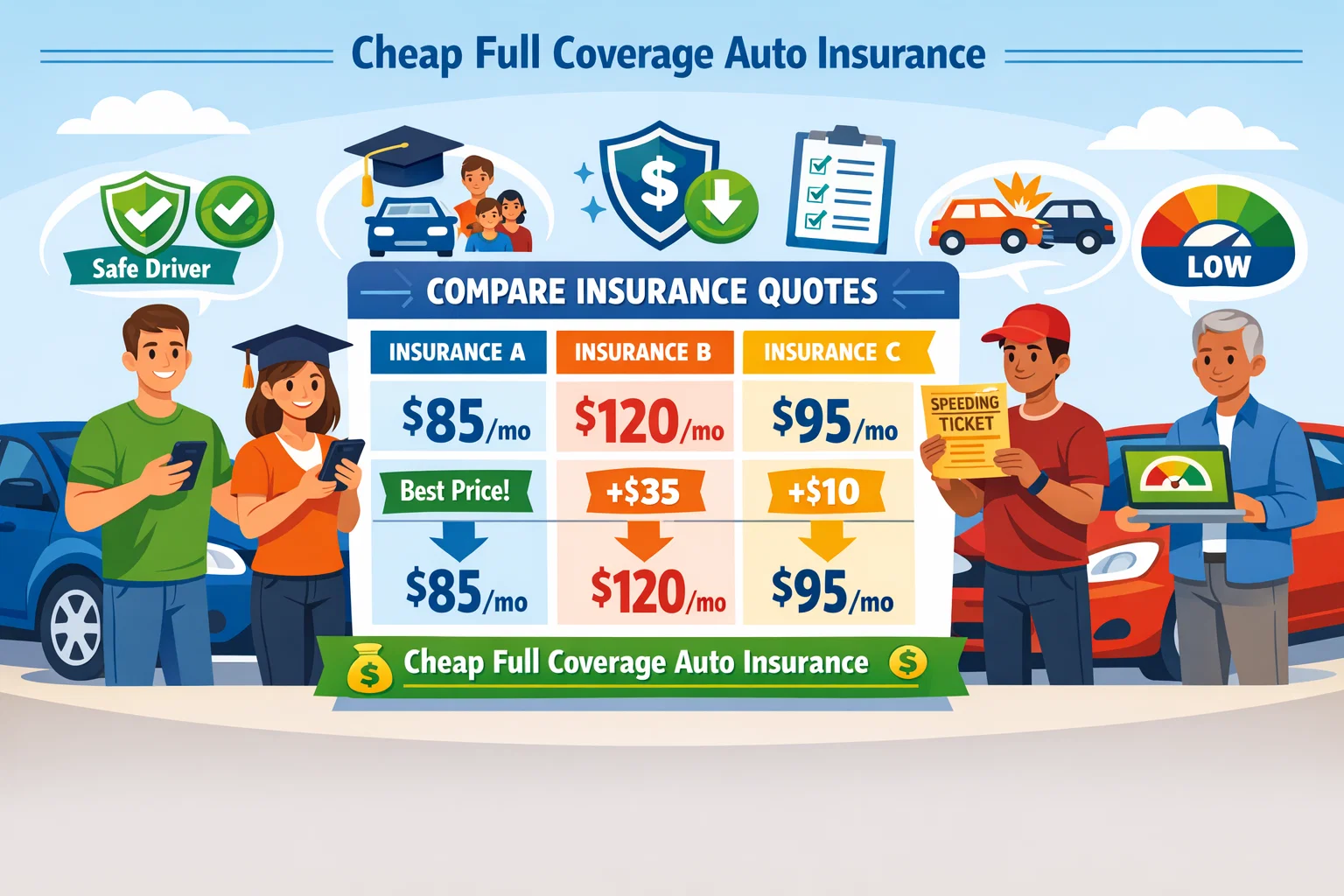
The cheapest full coverage quote changes based on the driver profile. There is no one company that is cheapest for every Florida driver.
Clean Record Drivers
Drivers with no accidents or tickets usually receive the best rates. This group should focus on bundling discounts, safe driver discounts, and higher deductible options.
Young Drivers
Young drivers often pay more, so comparing quotes is even more important. Staying on a family policy is often cheaper than buying a separate policy.
Drivers With A Ticket
A speeding ticket can raise rates at renewal. These drivers should compare new quotes before renewing because not every insurer increases rates the same way.
Drivers With An Accident
One accident can push rates much higher. A driver with an accident should still compare multiple insurers because the price gap between companies can widen after a claim.
Drivers With Poor Credit
In states and rating systems where credit affects pricing, poor credit can increase premiums. Improving credit over time can help reduce insurance costs.
How Bundling Can Lower Florida Auto Insurance Costs
Bundling auto insurance with home, renters, or condo insurance can reduce the total premium. This is one of the most common ways to cut cost without cutting protection.
A bundle may help you save when you combine:
- Auto and homeowners insurance
- Auto and renters insurance
- Auto and condo insurance
Bundling works best when both policies are still competitively priced. Do not assume the bundle is automatically the cheapest option. Compare the bundled total against separate policies too.
How To Lower Full Coverage Premiums Without Dropping Important Coverage
You can lower full coverage premiums in Florida without removing the main protection parts of the policy.
Use these methods:
Raise The Deductible Carefully
A higher deductible usually lowers the premium. Make sure you keep enough savings to pay that deductible if you file a claim.
Maintain A Clean Driving Record
Safe driving is one of the strongest long-term ways to reduce insurance cost.
Use Telematics If The Program Fits You
Some insurers offer app-based or device-based driving programs. Safe drivers can receive discounts through these programs.
Remove Unnecessary Extras
Review your add-ons. Keep the coverages you truly use. Cut the extras that do not fit your situation.
Improve Credit Over Time
Better credit can help with pricing in many rating systems.
Re-Shop Your Policy Regularly
One of the easiest ways to save money is to compare quotes before each renewal. Loyalty does not always bring the best rate.
Mistakes To Avoid When Shopping For Cheap Full Coverage In Florida
The most common mistake is comparing quotes that do not match. If one quote has a much higher deductible or lower liability limits, it is not a true comparison.
Avoid these mistakes:
Choosing Price Alone
A very cheap quote may come with weak protection.
Ignoring Deductible Size
A low premium with a very high deductible can become a problem during a claim.
Forgetting About Bundle Discounts
Many drivers miss savings by quoting only auto insurance and not checking a home or renters bundle.
Not Updating Mileage
If you drive less now than before, your premium may improve when the insurer has updated mileage information.
Renewing Without Comparing
Florida premiums change often. A better option may exist at renewal even if your current insurer was cheap last year.
What To Look For In A Cheap Full Coverage Policy
A good cheap full coverage policy balances five things: price, deductibles, liability limits, claim support, and useful add-ons.
Look for:
- Affordable monthly or annual premium
- Deductible you can actually afford
- Liability limits that protect your finances
- Collision and comprehensive included
- Good claims reputation
- Discounts you qualify for
That combination is more important than chasing the absolute lowest number on the screen.
Best Time To Compare Florida Car Insurance Quotes
The best time to compare quotes is before renewal, after a major life change, or after your driving profile improves.
Compare quotes when:
- Your current policy is close to renewal
- You moved to a new ZIP code
- You bought a different car
- You added or removed a driver
- A ticket got older
- Your credit improved
- You want to bundle with home or renters coverage
Summary
The cheapest full coverage auto insurance quotes in Florida come from careful comparison, not guesswork. Full coverage gives better protection than minimum coverage because it helps pay for damage to your own car as well as damage you cause to others.
A smart Florida driver compares equal quotes, checks deductibles, reviews discounts, and chooses coverage that fits both budget and real risk. That is how you lower cost without leaving yourself exposed.
Frequently Asked Questions
What is full coverage auto insurance in Florida?
Full coverage auto insurance in Florida usually includes liability insurance, collision coverage, and comprehensive coverage. Many Florida drivers also carry personal injury protection as part of their required setup.
Is full coverage required in Florida?
Full coverage is not usually required by state law for every driver, but lenders often require it for financed or leased vehicles.
Why is Florida full coverage so expensive?
Florida full coverage is expensive due to traffic, claim costs, weather risks, repair costs, and local rating differences by ZIP code and driver profile.
How can I get cheaper full coverage in Florida?
Compare multiple quotes with the same coverage setup, review deductibles, ask for discounts, consider bundling, and re-shop your policy at renewal.
Is full coverage worth it for an older car?
Full coverage is worth it for an older car only if the premium still makes sense compared with the vehicle’s value and your ability to replace it.