

Imtroduction
An auto accident law firm helps injured people protect evidence, deal with Insurance Companies, avoid harmful mistakes, and pursue financial recovery after an Auto Accident.
A strong auto accident attorney does more than file a claim. A strong lawyer helps clients get Medical Treatment, preserve records, control communication, track deadlines, and build a Personal Injury Claim that can support maximum compensation for medical bills, lost wages, pain and suffering, and other damages.
Many mistakes happen in the first hours, days, and weeks after a crash. Some mistakes happen at the scene.
Some mistakes happen during insurance calls. Some mistakes happen when hiring a car accident lawyer or speaking with a Personal Injury Attorney.
Mistakes to Avoid After an Accident
Mistakes to avoid after an accident usually involve 7 areas: failing to report the crash, admitting fault, failing to gather evidence, delaying care, ignoring medical advice, losing receipts, and failing to document injuries. These mistakes can reduce claim value before an auto accident lawyer even sees the case.
Failing to Call the Police
Failing to call the police is one of the most damaging early mistakes in a Personal Injury case. A police response creates a neutral record, identifies drivers and witnesses, and may support liability proof later.
Why It’s Crucial to Call the Police
It’s crucial to call the police because the report may record time, place, parties, vehicle damage, witness names, statements, traffic issues, and signs of impairment. A Car Accident Lawyer often uses the police report as an early case anchor.
Legal Implications of Not Calling the Police
The legal implications of not calling the police include weaker proof, disputed facts, missing witness data, and a harder insurance claim process. When the defense argues the crash was minor or never happened as described, the missing report becomes a problem.
Hidden Injuries and Their Risks
Hidden injuries and their risks matter after many Auto Accident cases. Concussions, soft-tissue injuries, internal injuries, and spinal pain may not show full symptoms at the scene. A police record and immediate medical evaluation can support later proof when symptoms increase.
Documentation for Insurance Claims
Documentation for insurance claims starts at the scene. The police report, photos, videos, witness names, and vehicle information all help the Insurance Company review the claim. Without that record, adjusters often challenge liability or injury severity.
Admitting Fault at the Scene
Admitting fault at the scene is a serious mistake. People say “I’m sorry” out of stress, not legal intent, but that statement can still be used against the claim.
Legal Ramifications of Admitting Fault
The legal ramifications of admitting fault include reduced leverage, partial blame arguments, and lower settlement value. A Personal Injury Lawyer will want the facts, not emotional guesses made at roadside under pressure.
How to Handle Conversations Post-Accident
Handle conversations post-accident by exchanging basic information, checking for safety issues, and avoiding blame language. Tell police and emergency staff the facts. Do not speculate. Do not argue. Do not guess about speed, injuries, or fault.
Not Gathering Information at the Scene
Not gathering information at the scene makes the claim harder to prove. A case built on memory alone is weaker than a case built on photos, names, and timestamps.
Essential pieces of information and evidence
There are 8 essential pieces of information and evidence to collect: driver names, contact details, insurance information, plate numbers, vehicle descriptions, photos of damage, scene photos, and witness names. A motor vehicle accident lawyer will use this material early.
Importance of Collecting Evidence at the Scene
The importance of collecting evidence at the scene is simple. Conditions change fast. Cars move. Debris is cleared. Weather changes. Witnesses leave. Immediate evidence often becomes the strongest evidence.
Waiting or Refusing to Seek Medical Treatment
Waiting or refusing to seek Medical Treatment hurts both health and case value. Medical records connect the Accident to the injury. Delayed care gives the defense room to argue that the injury came from something else.
Not Listening to Your Doctor
Not listening to your Doctor creates gaps in care, missed appointments, incomplete recovery records, and defense arguments about exaggeration. Follow-up care matters in any Personal Injury Claim.
Throwing Away Medical Bills and Other Receipts
Throwing away Medical Bills and other receipts weakens damages proof. Every out-of-pocket cost should be saved and organized.
Important documents and pieces of evidence to save
There are 9 important documents and pieces of evidence to save: emergency records, discharge papers, prescriptions, receipts, mileage logs, repair bills, rental car costs, wage loss records, and insurance letters. These items help calculate damages accurately.
Not Documenting the Accident and Injuries Thoroughly
Not documenting the Accident and injuries thoroughly reduces claim strength. Photos of bruising, swelling, casts, scars, vehicle damage, and the scene help show what happened and how serious the injuries were.
Not Keeping Track of Expenses and Symptoms
Not keeping track of expenses and symptoms makes it harder to prove daily impact. Keep a dated record of pain levels, sleep problems, missed work, therapy visits, household limits, and travel costs tied to treatment.
Mistakes When Dealing with Insurance Companies
Mistakes when dealing with Insurance Companies often involve silence, oversharing, or bad timing. Insurance adjusters look for inconsistencies, gaps, and statements that reduce payout risk.
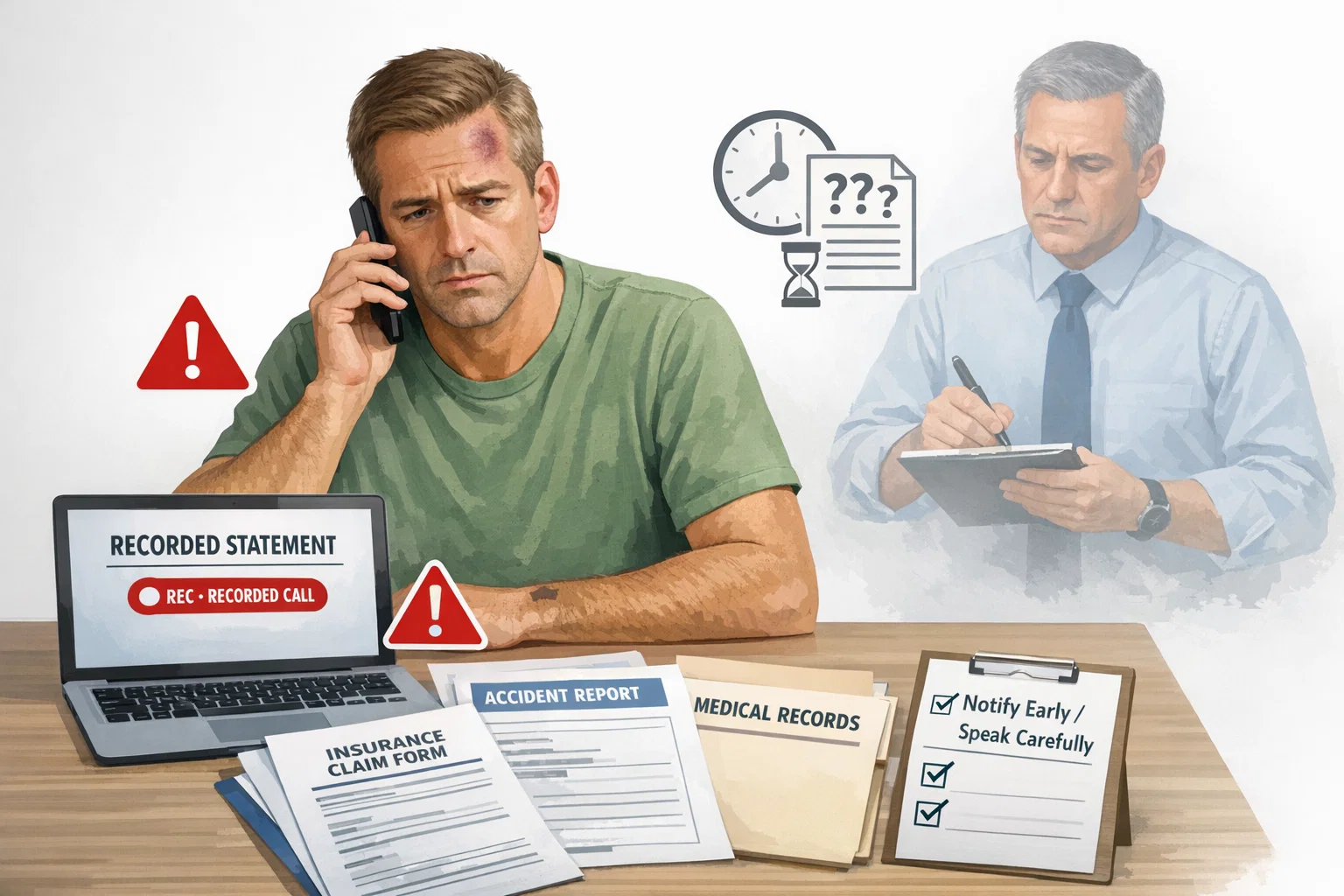
Neglecting to Notify Insurance
Neglecting to notify Insurance can create coverage issues and unnecessary claim delays. Prompt notice protects policy rights and starts the claim process.
Time Frames for Notifying Your Insurance Company
Time frames for notifying your Insurance Company depend on the policy, but fast notice is safer. Report the crash as soon as reasonably possible and let a lawyer guide later detailed communication when injuries are serious.
Consequences of Delaying Insurance Notification
The consequences of delaying insurance notification include claim suspicion, coverage disputes, delayed property handling, and extra pressure from adjusters asking why the report came late.
Giving Statements to Insurance Companies Without Legal Representation
Giving statements to Insurance Companies without legal representation is risky. A recorded statement can lock the injured person into incomplete facts before medical treatment is finished.
Speaking to Insurance Adjusters Without Legal Representation
Speaking to Insurance Adjusters without legal representation creates the same risk. Adjusters are trained to gather facts that help the Insurance Company reduce value.
The Do’s and Don’ts of Speaking With an Insurance Adjuster
The do’s and don’ts of speaking with an Insurance Adjuster are direct. Do confirm basic facts like identity, date, and location. Do not guess. Do not volunteer medical opinions. Do not minimize pain. Do not discuss fault.
The Insurance Adjuster’s Role in the Claims Process
The Insurance Adjuster’s role in the claims process is to investigate the claim for the Insurance Company and evaluate payout exposure. The adjuster is not the injured person’s advisor.
What if the Adjuster Requests a Statement?
If the adjuster requests a statement, give only basic identifying facts until you understand your rights. Serious injury cases should be reviewed by an auto accident attorney before any recorded interview.
What Information Will They Ask Us to Provide?
They will often ask for 6 categories of information: how the crash happened, who was involved, what injuries exist, what treatment was received, whether prior injuries existed, and whether work was missed. Each answer affects liability and damages.
Never Admit Fault
Never admit fault to the Insurance Company. Fault is a legal question built from evidence, traffic rules, witness proof, and vehicle damage, not from one rushed phone call.
Avoid Answering Questions about the Accident
Avoid answering detailed questions about the Accident until you know the full facts and understand claim strategy. Early guesses often become defense exhibits later.
Don’t Speak about Your Physical or Emotional Condition
Don’t speak casually about your physical or emotional condition. Saying “I’m okay” or “I feel better” too early can be used to argue that the injuries were minor.
Mistakes Regarding Settlements and Legal Deadlines
Mistakes regarding settlements and legal deadlines often cost more than scene mistakes. A bad settlement can end the case forever. A missed deadline can bar the case completely.
Accepting the First Settlement Offer You Receive
Accepting the first settlement offer you receive is often a mistake. Early offers usually arrive before the full medical picture, long-term limitations, and future costs are known.
Accepting a Low Settlement Offer
Accepting a low settlement offer leaves money on the table and may shift medical and financial pressure onto the injured person. A settlement should reflect the real value of the injury, not the insurer’s first number.
Accepting a Settlement Without Understanding Your Rights
Accepting a settlement without understanding your rights is dangerous because settlements usually require a release. Once signed, that release often ends the claim permanently.
Not Submitting All Settlement Offers to Your Injury Attorney
Not submitting all settlement offers to your injury attorney creates strategy problems. A Personal Injury Attorney needs to see every written or verbal offer to assess timing, risk, and negotiation direction.
Ignoring Important Deadlines
Ignoring important deadlines hurts Personal Injury Cases at every stage. Reporting deadlines, treatment follow-up, evidence preservation, policy notice rules, and filing deadlines all matter.
Missing the Statute of Limitations
Missing the statute of limitations can end the claim. Every state has filing limits. The injured person should speak to a lawyer early, not after the deadline is close.
Waiting Too Long to File a Claim
Waiting too long to file a claim weakens evidence, reduces witness availability, and increases defense arguments about delay. Fast action protects leverage.
Mistakes When Hiring/Working with a Lawyer
Mistakes when hiring or working with a lawyer often come from rushing, focusing only on price, or hiding facts. The right legal consultation should test experience, communication, strategy, and trust.
Failing to Consult a Personal Injury Attorney
Failing to consult a Personal Injury Attorney leaves the injured person without guidance on evidence, Insurance, deadlines, and damages. Even a free case evaluation can prevent major errors.
Not Hiring an Auto Accident Attorney
Not hiring an Auto Accident Attorney can be costly in serious crashes, disputed fault cases, uninsured motorist recovery matters, commercial vehicle collisions, or complex injury settlements.
How an Auto Accident Attorney Can Help
An auto accident attorney can help in 7 ways: protect evidence, control insurer contact, calculate damages, handle legal paperwork, negotiate settlement, prepare litigation, and fight Insurance Companies when they deny or undervalue claims.
Common Misconceptions About Legal Fees
Common misconceptions about legal fees include the belief that every lawyer charges upfront or that legal fees secure no extra value. Many plaintiff-side firms work on contingency, which means the fee is tied to recovery.
Common Mistakes to Avoid When Hiring a Car Accident Lawyer
Common mistakes to avoid when hiring a Car Accident Lawyer include ignoring experience, skipping reviews, not asking about trial work, and signing with the first person who answers the phone.
Rushing the Selection Process
Rushing the selection process can lead to poor fit. Compare communication style, case focus, office support, and track record before hiring.
Disregarding Online Reviews and Testimonials
Disregarding online reviews and testimonials removes a useful source of public feedback. Reviews are not the only factor, but they can reveal patterns in communication and service.
Ignoring Reviews and Testimonials
Ignoring reviews and testimonials may hide warning signs such as slow communication, fee confusion, or pressure to settle quickly.
Failing to Verify Credentials and Disciplinary Records
Failing to verify credentials and disciplinary records is an avoidable mistake. A licensed lawyer’s background should be checked before signing a fee agreement.
Neglecting to Verify Credentials and Licenses
Neglecting to verify credentials and licenses can expose the client to poor representation or even unauthorized practice.
Choosing an Unlicensed Attorney
Choosing an unlicensed attorney is never acceptable. The lawyer handling the claim should be licensed in the relevant jurisdiction or working properly with local counsel.
Hiring an Attorney Without Personal Injury Experience
Hiring an attorney without Personal Injury Experience can weaken the case. Personal Injury law requires knowledge of damages, insurer tactics, medical proof, and litigation sequence.
Choosing an Accident Attorney Without Proven Personal Injury Experience
Choosing an Accident Attorney without proven Personal Injury Experience is especially risky in cases involving wrongful death, distracted driving litigation, product liability, or serious bodily injury.
Overlooking the Lawyer’s Specialization
Overlooking the lawyer’s specialization can create mismatch. A Product Liability Lawyer or Construction Accident Lawsuit attorney may be strong in another field but not ideal for an ordinary car crash claim unless the facts overlap.
Neglecting to Discuss Fees Upfront
Neglecting to discuss fees upfront causes confusion later. Ask how the contingency works, how costs are handled, and whether expenses come out before or after the fee is calculated.
Agreeing to Pay Upfront Fees
Agreeing to pay upfront fees without understanding the structure is risky. Many auto collision lawyer cases are handled on contingency, so large upfront demands should be examined carefully.
Focusing Solely on Cost
Focusing solely on cost is a mistake. The lowest fee does not always produce the best outcome, and “discount” representation can mean limited case work.
Falling for “Discount” Lawyers Who Promise Lower Fees
Falling for “discount” lawyers who promise lower fees can hurt claim value if the lawyer lacks staff, resources, or trial readiness.
Overlooking Communication Skills
Overlooking communication skills creates problems through every stage of the case. A good lawyer should explain process, risks, and options in plain language.
Not Considering Communication Style
Not considering communication style can lead to frustration and mistrust. Some clients want direct calls. Some want email updates. The fit matters.
Working With a Lawyer Who Doesn’t Communicate
Working with a lawyer who doesn’t communicate leaves the client confused about treatment, deadlines, offers, and expectations.
Ignoring Gut Instincts and Lack of Comfort
Ignoring gut instincts and lack of comfort is a mistake. The client should be able to trust the lawyer handling private medical and financial facts.
Failing to Discuss Their Case Management Approach
Failing to discuss their case management approach can lead to surprises about who actually handles the file. Ask whether lawyers, paralegals, or case managers handle daily contact.
Failing to Understand the Attorney’s Strategy
Failing to understand the attorney’s strategy leaves the client unable to make informed choices. Ask how the lawyer plans to prove liability, document damages, and respond to low offers.
Neglecting the Advantage of Local Knowledge and Familiarity
Neglecting the advantage of local knowledge and familiarity can hurt the case. Local practice matters in negotiations, filing habits, and courtroom culture. A Car Accident Lawyer in Chicago, St. Louis, Palm Coast, FL, Ormond Beach, Florida, Middletown, NY, or Hudson Valley, NY may know local defense patterns better than an out-of-area office.
Settling for the First Lawyer Contacted
Settling for the first lawyer contacted may work in some cases, but comparison is smarter. An initial consultation with more than one firm helps test case fit.
Hiring a Lawyer Who Settles Quickly and Avoids Trial
Hiring a lawyer who settles quickly and avoids trial lowers leverage. Insurance Companies pay more attention to experienced trial attorneys who can litigate when needed.
Hiring a Lawyer Without the Resources to Fight Insurance Companies
Hiring a lawyer without the resources to fight Insurance Companies is risky in serious cases. Complex injury files may require experts, records work, and accident reconstruction analysis.
Ignoring the Lawyer’s Track Record
Ignoring the lawyer’s track record removes a useful measure of performance. Look at case type experience, reviews, discipline history, and examples of case results.
Forgetting to Discuss Case Timeline
Forgetting to discuss case timeline causes unrealistic expectations. Some claims resolve in months. Others take longer due to treatment, disputed liability, or litigation.
Not Discussing Expectations
Not discussing expectations creates friction. The lawyer and client should align on communication, decision points, timeline, and claim goals.
Not Accurately Describing Your Injury Severity
Not accurately describing your injury severity can damage credibility. A Personal Injury Lawyer needs a full and honest picture of pain, limitations, and recovery.
Not Disclosing Your Complete Medical History
Not disclosing your complete medical history is a serious mistake. Prior injuries, surgeries, and conditions usually surface later through records, and hidden facts can hurt trust.
Not Reporting All Prior Insurance Claims and Legal Actions
Not reporting all prior insurance claims and legal actions weakens the attorney’s ability to prepare for defense arguments. Honesty early is safer than damage control later.
Summary
An auto accident law firm helps accident victims avoid costly mistakes, protect their rights, and secure maximum compensation for injuries and damages.
The most common errors in personal injury cases include failing to call the police, admitting fault, delaying medical treatment, and mishandling communication with Insurance Companies.
A skilled auto accident attorney guides clients through evidence collection, proper documentation, and settlement negotiations while ensuring deadlines are met. Hiring an experienced car accident lawyer, staying honest, and maintaining clear communication improve case strength and increase the chances of a successful Personal Injury Claim.